
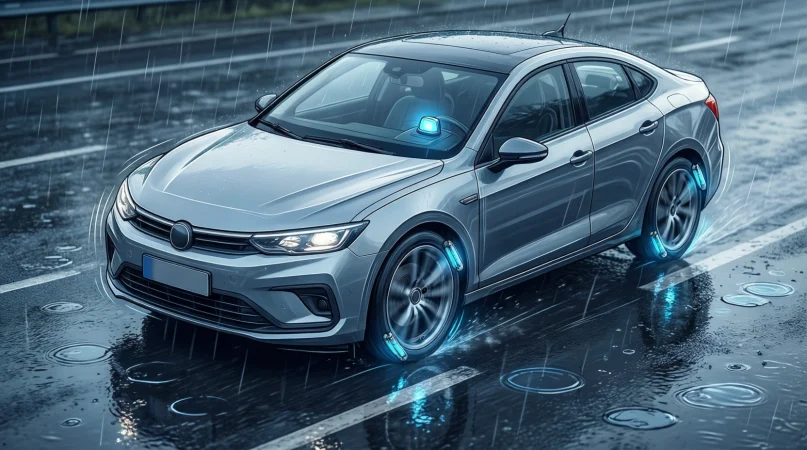
Definition: ABS in a car stands for Anti-lock Braking System.
It is a safety system that prevents a vehicle’s wheels from locking up during hard braking, helping the driver maintain steering control and reduce the risk of skidding especially on slippery or emergency road conditions.
Understanding ABS in a car, or Anti-lock Braking System, is essential for every driver who wants to stay safe on the road. With years of automotive engineering experience and insights from vehicle safety studies, it’s clear that ABS is not just a fancy feature it’s a proven system that prevents wheel lock, reduces skidding, and helps drivers maintain steering control in emergencies.
Trusted by manufacturers worldwide and recommended by safety authorities, ABS has become a standard in modern vehicles, saving countless lives by improving braking efficiency and road handling.
By knowing how ABS works, recognizing its dashboard indicators, and following proper braking practices, drivers can make informed decisions that enhance safety and control in real-world driving situations.
Why ABS Matters (And Why Drivers Care)
Imagine slamming on the brakes during a sudden stop:
- Without ABS → wheels can lock, the car skids, and steering becomes difficult.
- With ABS → wheels pulse instead of locking, allowing you to steer while braking.
In short: ABS helps you brake hard and still stay in control.
That’s why it’s now a standard safety feature in most modern vehicles worldwide.
What Is ABS in a Car? A Simple Explanation
The Anti-lock Braking System works by automatically adjusting brake pressure when it detects that a wheel is about to stop spinning.
Instead of one long, locked brake squeeze, ABS:
- Rapidly applies and releases brake pressure
- Keeps the wheels rotating
- Maintains traction between tires and road
This process happens many times per second, far faster than a human could pump the brakes manually.
How ABS Works (Step-by-Step)
Here’s what happens when you brake hard in an ABS-equipped car:
- Sensors monitor the speed of each wheel
- The system detects when a wheel is about to lock
- Brake pressure is reduced momentarily
- Pressure is reapplied once traction returns
- This cycle repeats automatically until the car slows safely
You may feel:
- A pulsing sensation in the brake pedal
- A slight vibration or noise
👉 That’s normal and means ABS is doing its job.
Origin and History of ABS in Cars
ABS may feel modern, but it’s been around longer than many drivers realize.
Timeline of ABS Development
- 1920s–1950s: Early anti-lock concepts used in aircraft
- 1960s: Experimental ABS systems tested in luxury cars
- 1978: Mercedes-Benz introduces the first modern electronic ABS
- 1990s: ABS becomes common in passenger vehicles
- 2010s–Present: ABS is mandatory in many countries
Today, ABS is considered a core vehicle safety feature, alongside airbags and traction control.
Why ABS Became So Popular
ABS gained popularity because it directly addresses one of the most dangerous driving moments: emergency braking.
Key reasons for its widespread adoption:
- Reduces accident risk on wet or icy roads
- Improves steering control during panic stops
- Helps drivers avoid obstacles while braking
- Proven to reduce certain types of crashes
Insurance companies and safety regulators strongly support ABS-equipped vehicles.
Real-World Usage of ABS in Cars
ABS is not something you “turn on.” It’s always monitoring and only activates when needed.
Common Situations Where ABS Helps
- Sudden stops on highways
- Wet or slippery roads
- Gravel or uneven surfaces
- Emergency obstacle avoidance
- Sharp downhill braking
When ABS Activates, You Might Notice:
- Brake pedal pulsation
- Clicking or grinding noises
- ABS warning light flicker (momentary)
All of these are normal during ABS activation.
ABS Dashboard Light: What It Means
If you see the ABS light on your dashboard, it’s your car’s way of saying:
“Hey, the Anti-lock Braking System needs attention.”
What the ABS Light Could Indicate
- Faulty wheel speed sensor
- Low brake fluid
- Electrical issue
- ABS module problem
⚠️ Important:
- Your regular brakes usually still work
- ABS functionality may be disabled
- You should get it checked soon
ABS vs Regular Brakes: Key Differences
Here’s a clear comparison to help you understand the difference.
ABS vs Non-ABS Brakes Table
| Feature | ABS Brakes | Regular Brakes |
| Prevents wheel lock | Yes | No |
| Steering control while braking | Yes | Limited |
| Skid reduction | High | Low |
| Works automatically | Yes | No |
| Ideal for emergencies | Yes | No |
ABS vs Related Car Safety Systems
ABS doesn’t work alone it’s often part of a larger safety network.
Comparison With Similar Systems
| System | Full Name | Purpose |
| ABS | Anti-lock Braking System | Prevents wheel lock |
| EBD | Electronic Brakeforce Distribution | Balances braking force |
| TCS | Traction Control System | Prevents wheel spin |
| ESC | Electronic Stability Control | Prevents loss of control |
🧠 Fun fact: ABS is the foundation system many others rely on it to function.
Examples of ABS Usage in Context
Friendly Tone
“I felt the brake pedal vibrating that’s just the ABS kicking in 😄”
Neutral Tone
“The car’s ABS system activated during the sudden stop.”
Concerned or Dismissive Tone
“The ABS light has been on for weeks; I should probably get it checked.”
Does ABS Make Your Car Stop Faster?
Not always and this surprises many drivers.
ABS Does:
- Help you steer while braking
- Reduce skidding
- Improve control
ABS Does NOT Always:
- Shorten stopping distance on dry roads
- Replace safe driving habits
On loose gravel or deep snow, ABS may actually increase stopping distance but still improves control.
Common Myths About ABS (Debunked)
- ❌ ABS means you don’t need to steer → False
- ❌ ABS stops the car instantly → False
- ❌ ABS replaces good tires → False
- ✅ ABS helps you stay in control → True
Alternate Meanings of ABS (Briefly)
While ABS in cars almost always means Anti-lock Braking System, it can mean other things in different contexts:
- ABS (fitness): Abdominal muscles
- ABS (plastic): Acrylonitrile Butadiene Styrene
- ABS (law): Asset-backed securities
👉 Context matters but in automotive terms, ABS = braking safety.
Professional or Polite Alternatives to Saying ABS
If you want to sound more formal or professional:
- Anti-lock braking system
- Vehicle braking safety system
- Electronic braking assistance
Example:
“The vehicle is equipped with an advanced anti-lock braking system for improved safety.”
Usage Tips for Drivers With ABS
To get the most out of ABS:
- Brake firmly and steadily during emergencies
- Do NOT pump the brakes
- Keep steering toward a safe path
- Maintain tires and brake fluid
- Pay attention to warning lights
Frequently Asked Questions
1. What does ABS mean in a car dashboard?
It stands for Anti-lock Braking System, a safety feature that prevents wheel lock during braking.
2. Is it safe to drive with the ABS light on?
Yes, but ABS may not work. Regular brakes still function, but safety is reduced.
3. Does ABS work at low speeds?
ABS usually activates above very low speeds, but some systems work almost to a full stop.
4. Should I pump the brakes if I have ABS?
No. Press firmly and let the system do the work.
5. Does ABS help on ice or snow?
Yes, especially for steering control, though stopping distance may vary.
6. Is ABS mandatory in cars?
In many countries, yes especially for newer vehicles.
7. Can ABS fail?
Yes, due to sensor, wiring, or fluid issues, but failures are usually detectable via warning lights.
8. Is ABS expensive to repair?
Costs vary, but sensor repairs are often affordable compared to major brake work.
Conclusion:
In conclusion, ABS, or Anti-lock Braking System, is a critical safety feature backed by decades of automotive engineering and trusted by vehicle safety authorities worldwide. It helps prevent wheel lock, maintain steering control, and reduce skidding during emergency braking, keeping drivers and passengers safer on the road.
Understanding how ABS works, paying attention to warning lights, and maintaining your brakes and tires ensures that this system performs optimally. By relying on ABS and practicing safe driving habits, you can confidently navigate slippery or sudden-stop situations, making your driving experience both safer and more controlled.

Justin Young is a passionate Digital Creator and Content Writer who specializes in crafting engaging, informative, and results-driven content. He focuses on creating high-quality, blog posts, and digital content that capture attention and deliver real value to readers. With a strong interest in storytelling, trends, and online growth, Justin helps brands and individuals connect with their audiences through clear, impactful, and creative writing.