
Definition:
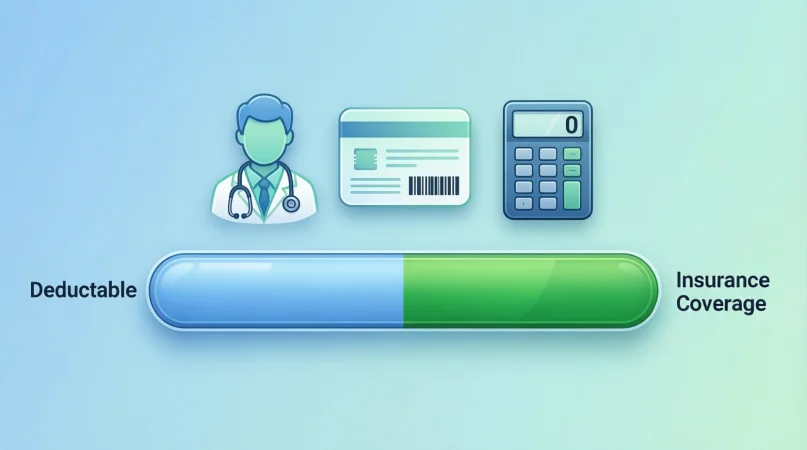
In health insurance, a deductible is the amount of money you must pay out of your own pocket for covered medical services before your insurance plan starts paying its share.
If you’ve ever looked at a health insurance plan and thought, Why do I have to pay before insurance helps? you’re not alone. The word deductible is one of the most searched (and misunderstood) insurance terms, and for good reason. It directly affects how much you pay, when coverage begins, and which plan makes sense for your life and budget.
This guide breaks it all down in plain English with no insurance jargon overload. By the end, you’ll know exactly what a deductible means, how it works in real life, and how to choose the right one with confidence.
What Does Deductible Mean in Health Insurance?
A health insurance deductible is the fixed amount you pay each year for covered healthcare services before your insurance company starts to pay.
Think of it as a “threshold” you must cross.
Once you meet your deductible:
- Your insurance begins sharing costs
- You typically pay copays or coinsurance
- Preventive services may already be covered (more on that below)
Simple Definition Recap
- Deductible = what you pay first
- Insurance coverage = kicks in after
Why Deductibles Exist (And Why They Matter)
Deductibles are designed to:
- Reduce unnecessary medical spending
- Share financial responsibility between you and the insurer
- Keep monthly premiums lower for some plans
In short, the higher the deductible, the lower the monthly premium and vice versa.
This trade-off is at the heart of most health insurance decisions.
Origin of the Term “Deductible”
The word deductible comes from the Latin root deducere, meaning to take away or subtract.
Originally, the term was widely used in:
- Accounting
- Taxes
- Legal contracts
Over time, insurers adopted it to describe the portion of costs deducted from coverage responsibility meaning the part you pay before insurance pays.
How Deductibles Work in Real Life
Let’s walk through a clear, realistic example.
Example 1: Basic Medical Visit (Neutral Tone)
- Annual deductible: $1,500
- Doctor visit cost: $200
- Amount you’ve paid so far this year: $0
👉 You pay the full $200 because you haven’t met your deductible yet.
Example 2: Hospital Stay
- Deductible: $1,500
- Hospital bill: $5,000
- You’ve already paid: $1,500
🎉 Your deductible is met!
Now:
- Insurance pays most of the remaining cost
- You may only owe coinsurance (for example, 20%)
Example 3: Unexpected Expense
“I thought I had insurance… why am I still paying everything?”
This usually happens when:
- The deductible hasn’t been met
- The service isn’t covered
- The provider is out of network
Deductible vs Other Common Health Insurance Terms
Understanding deductibles is easier when you compare them with related terms.
Comparison Table: Key Health Insurance Costs
| Term | What It Means | When You Pay |
| Deductible | Amount you pay before insurance starts | First |
| Copay | Flat fee per visit or service | After deductible (sometimes before) |
| Coinsurance | Percentage of cost you share | After deductible |
| Out-of-pocket maximum | Most you’ll pay in a year | Final limit |
| Premium | Monthly cost of the plan | Every month |
Types of Health Insurance Deductibles
Not all deductibles work the same way.
1. Individual Deductible
Applies to one person on a plan.
2. Family Deductible
Applies to the entire family combined.
3. Embedded Deductible
Each person has their own deductible within a family plan.
4. Aggregate Deductible
The family must meet the total combined deductible before coverage begins.
High-Deductible vs Low-Deductible Health Plans
High-Deductible Health Plan (HDHP)
Pros
- Lower monthly premiums
- Often eligible for Health Savings Accounts (HSA)
Cons
- Higher upfront medical costs
- Not ideal for frequent care
Low-Deductible Health Plan
Pros
- Less to pay before coverage starts
- Better for chronic conditions
Cons
- Higher monthly premiums
What Does “$0 Deductible” Mean?
A $0 deductible means insurance coverage starts immediately for covered services.
But watch out:
- Premiums are usually higher
- Copays may still apply
- Not all services are included
Services That Often Bypass the Deductible
Thanks to healthcare laws in many countries, some services are covered before you meet your deductible, such as:
- Annual checkups
- Vaccinations
- Preventive screenings
- Well-child visits
Always confirm with your insurer, though rules vary by plan.
Alternate Meanings of “Deductible”
Outside health insurance, deductible can mean:
Tax Deductible
An expense you can subtract from taxable income.
Insurance Deductible (Auto/Home)
The amount you pay before insurance covers a claim.
The core idea stays the same: what you pay first.
Professional or Polite Alternatives to “Deductible”
In formal or explanatory writing, you may see:
- Out-of-pocket threshold
- Initial coverage limit
- Cost-sharing requirement
- Upfront patient responsibility
These terms often appear in policy documents and benefit summaries.
How to Choose the Right Deductible
Ask yourself:
- How often do I visit doctors?
- Can I afford higher upfront costs?
- Do I want lower monthly payments?
- Do I qualify for an HSA?
Quick Tip 💡
If you’re generally healthy → Higher deductible may save money
If you need frequent care → Lower deductible may be safer
Common Mistakes People Make About Deductibles
- Assuming deductible = out-of-pocket maximum (it’s not)
- Thinking insurance pays nothing until deductible is met (not always true)
- Ignoring network rules
- Forgetting deductibles reset yearly
FAQs
1. What does deductible mean in simple words?
It’s the amount you pay for healthcare before insurance starts helping.
2. Do I pay the deductible every year?
Yes. Deductibles typically reset annually.
3. Is a deductible good or bad?
Neither it depends on your health needs and budget.
4. Does insurance cover anything before the deductible?
Often yes especially preventive care.
5. Can copays count toward a deductible?
Sometimes, depending on the plan.
6. What happens after I meet my deductible?
Insurance starts paying most of the costs.
7. Is deductible the same as out-of-pocket maximum?
No. The out-of-pocket maximum is the total yearly limit.
8. Can I avoid paying a deductible?
Only with specific plans like $0-deductible policies.
Conclusion
Understanding what a deductible means in health insurance puts you in control of your healthcare spending. Simply put, a deductible is the amount you pay out of pocket before your insurance plan starts sharing the cost. While it may feel frustrating at first, the deductible plays a key role in balancing monthly premiums, out-of-pocket expenses, and overall coverage value.
The best deductible for you depends on your health needs, budget, and how often you use medical services. If you rarely visit the doctor, a higher deductible with lower monthly premiums may save you money. If you expect regular care or ongoing treatment, a lower deductible can offer peace of mind and more predictable costs.

Justin Young is a passionate Digital Creator and Content Writer who specializes in crafting engaging, informative, and results-driven content. He focuses on creating high-quality, blog posts, and digital content that capture attention and deliver real value to readers. With a strong interest in storytelling, trends, and online growth, Justin helps brands and individuals connect with their audiences through clear, impactful, and creative writing.