
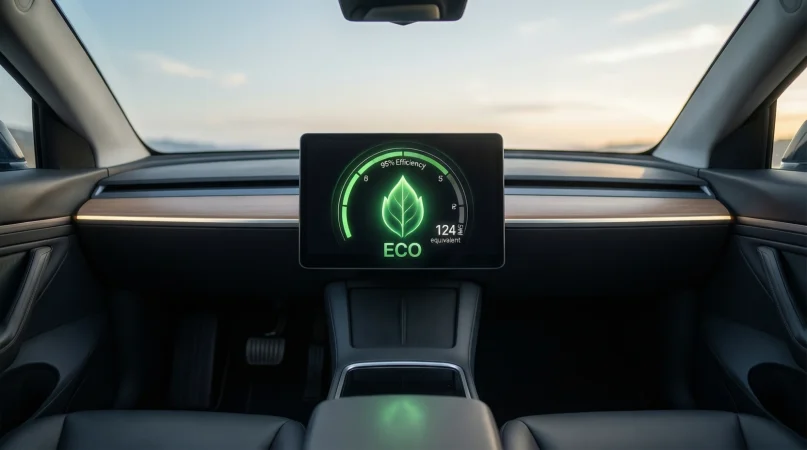
Definition: Eco in a car refers to fuel-saving or efficiency-focused features that adjust engine performance, transmission behavior, and climate controls to reduce fuel consumption and emissions.
Eco in a car is one of those labels you see on dashboards, buttons, or driving modes and it instantly sounds good. Eco equals saving fuel, saving money, and being kinder to the planet… right?
Yes but there’s more nuance behind that simple word.
Whether you’ve noticed an Eco light, Eco mode, or Eco indicator in your vehicle, this guide breaks it all down in a clear, friendly, no-nonsense way. By the end, you’ll know exactly what Eco means in a car, how it works, when to use it, and when not to.
Featured Snippet Definition: What Does Eco Mean in a Car?
Eco in a car refers to fuel-saving or efficiency-focused features that adjust engine performance, transmission behavior, and climate controls to reduce fuel consumption and emissions.
In simple terms, Eco mode helps your car use less fuel by encouraging smoother, more efficient driving.
What Does “Eco” Stand For in Cars?
The word Eco comes from economy and ecology. In the automotive world, it blends both meanings:
- Economy → Better fuel efficiency, lower running costs
- Ecology → Reduced emissions, less environmental impact
So when a car says “Eco,” it’s talking about driving efficiently, not necessarily driving slowly.
Origin and Rise of Eco Mode in Cars
Where did Eco mode come from?
Eco features became popular in the late 1990s and early 2000s as car manufacturers responded to:
- Rising fuel prices
- Stricter emissions regulations
- Growing environmental awareness
Early hybrids like the Toyota Prius helped popularize Eco indicators, and soon even regular petrol and diesel cars followed.
Why Eco became mainstream
Today, Eco modes are common because they:
- Help drivers save fuel without changing cars
- Improve official fuel economy ratings
- Appeal to eco-conscious buyers
You’ll now find Eco features in:
- Petrol cars
- Diesel cars
- Hybrid vehicles
- Some electric vehicles (EVs)
How Eco Mode Works in a Car
Eco mode doesn’t magically change your engine it adjusts how your car behaves.
Common changes Eco mode makes
When Eco mode is activated, your car may:
- Reduce throttle sensitivity (slower acceleration)
- Shift gears earlier (lower RPMs)
- Limit engine power slightly
- Optimize air conditioning and climate control
- Encourage smoother braking and acceleration
Eco indicator vs Eco mode
These are often confused, but they’re not the same.
| Feature | What It Does |
| Eco Mode | Actively changes vehicle settings |
| Eco Indicator/Light | Shows when you’re driving efficiently |
Eco Mode vs Normal Mode vs Sport Mode
Here’s how Eco compares to other common driving modes:
| Driving Mode | Fuel Efficiency | Performance | Best For |
| Eco | High | Lower | City driving, saving fuel |
| Normal | Balanced | Balanced | Everyday driving |
| Sport | Low | High | Quick acceleration, highways |
Quick takeaway:
Eco saves fuel, Sport boosts performance, Normal sits in between.
Real-World Usage: When Should You Use Eco Mode?
Eco mode works best in steady, predictable driving conditions.
Best times to use Eco mode
- City traffic 🚦
- Long commutes
- Flat roads
- Light highway cruising
- Stop-and-go traffic
When Eco mode is NOT ideal
- Steep hills or mountains
- Heavy towing or full loads
- Overtaking on highways
- Emergency acceleration
Eco mode isn’t dangerous but it can feel sluggish when you need instant power.
Examples of Eco in Cars
Friendly / Neutral Examples
- “I keep my car in Eco mode during city driving it saves fuel.” 😊
- “The Eco light turns on when I drive smoothly.”
- “Eco mode helps me stretch a full tank further.”
Slightly Negative / Dismissive Tone
- “Eco mode feels too slow when I need quick acceleration.” 😕
- “I turn Eco off on highways it kills performance.”
Neutral Technical Usage
- “Eco mode reduces throttle response and optimizes gear shifts.”
Eco Mode in Automatic vs Manual Cars
Automatic cars
Eco mode works best in automatics because it can:
- Control gear changes
- Lower RPMs efficiently
- Adjust transmission logic
Manual cars
Manual cars may still have:
- Eco indicators
- Shift suggestions
- Fuel efficiency feedback
But the driver still controls gear selection.
Does Eco Mode Really Save Fuel?
Short answer: Yes but not always dramatically.
Typical fuel savings
- 5% to 10% in city driving
- More noticeable for aggressive drivers
- Less impact if you already drive smoothly
Factors that affect savings
- Driving habits
- Traffic conditions
- Vehicle type
- Engine size
Eco mode works best when paired with gentle driving habits.
Eco Mode in Hybrid and Electric Cars
In hybrid vehicles
Eco mode often:
- Favors electric motor usage
- Limits engine engagement
- Optimizes regenerative braking
In electric vehicles (EVs)
Eco mode may:
- Reduce power output
- Limit top speed
- Extend driving range 🔋
In EVs, Eco mode is especially useful for maximizing range.
Common Eco Symbols and Indicators
You may see:
- Green leaf 🍃
- “ECO” text on dashboard
- Bar graphs or efficiency meters
- Color-changing displays
These visuals encourage efficient driving habits.
Comparison With Related Terms
Eco vs MPG
| Term | Meaning |
| Eco | Driving mode or indicator |
| MPG | Measurement of fuel efficiency |
Eco vs Green Driving
- Eco mode = built-in vehicle feature
- Green driving = overall driving behavior
Eco vs Start-Stop System
- Eco mode affects performance
- Start-stop turns off engine at stops
They often work together but are not the same.
Alternate Meanings of “Eco”
While this article focuses on cars, Eco can also mean:
- Eco-friendly products
- Economic mode in electronics
- Ecological initiatives
In vehicles, Eco almost always means efficiency-focused driving.
Polite or Professional Alternatives to Saying “Eco”
If you’re writing or speaking formally, you can say:
- Fuel-efficient mode
- Economy mode
- Efficiency-optimized driving mode
- Low-consumption setting
These sound more technical and professional.
Labeled Example Table: Eco Mode Effects
| Vehicle System | Change in Eco Mode |
| Throttle | Reduced sensitivity |
| Transmission | Earlier gear shifts |
| Engine | Lower RPM operation |
| AC System | Reduced power usage |
| Display | Efficiency feedback |
Pros and Cons of Eco Mode
Advantages
- Saves fuel 💰
- Reduces emissions 🌍
- Encourages smoother driving
- Extends EV range
Disadvantages
- Slower acceleration
- Less responsive throttle
- Not ideal for hills or towing
FAQs
1. Does Eco mode damage the engine?
No. Eco mode is designed to be safe and actually reduces engine stress.
2. Should I always drive in Eco mode?
Not always. Use it for city driving, not when you need quick power.
3. Does Eco mode work on highways?
Yes, especially during steady cruising but not during overtaking.
4. Why does my car feel slow in Eco mode?
Eco mode reduces throttle response to save fuel.
5. Is Eco mode good for long trips?
Yes, if the road is flat and speed is consistent.
6. Does Eco mode save fuel in traffic?
Yes, that’s where it works best.
7. Can I turn Eco mode off?
Yes. Most cars allow manual switching.
8. Is Eco mode the same in every car?
No. Each manufacturer tunes Eco mode differently.
Conclusion
So, what does Eco mean in a car? In short, it’s all about driving smarter, not harder. Eco mode and Eco indicators are designed to help your car use fuel more efficiently by adjusting throttle response, gear shifts, and energy usage without harming the engine or compromising safety.
Eco features are most effective during city driving, traffic, and steady cruising, where smooth acceleration and gentle braking make a real difference. While Eco mode may feel slower when you need quick power, it shines when your goal is saving fuel, lowering costs, and reducing emissions.

Megan Lewis is a passionate and experienced content writer specializing in creating engaging and well-researched content. She excels at producing clear, informative, and reader-focused content that not only ranks well on search engines but also delivers real value to audiences.