
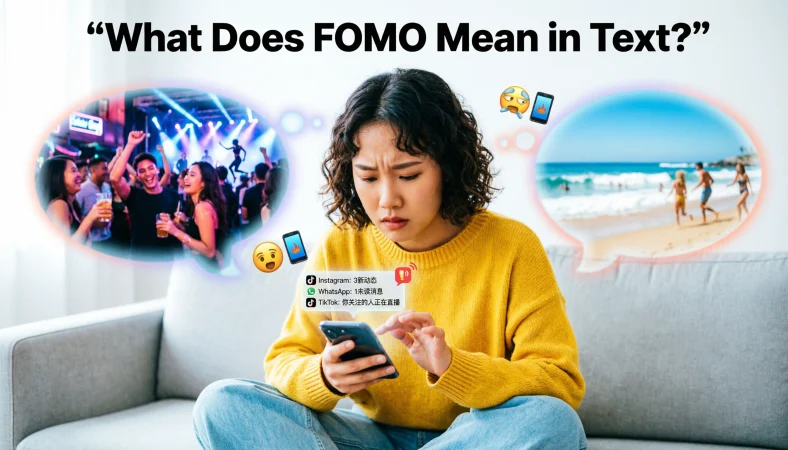
Definition:
FOMO stands for Fear of Missing Out. In text messages and on social media, it describes the anxious feeling that others are having fun, experiencing opportunities, or enjoying something exciting without you.
Have you ever scrolled through Instagram and suddenly felt like everyone was at a party you weren’t invited to? Or seen friends posting vacation pictures while you’re stuck at home? That uncomfortable, left-out feeling has a name: FOMO.
In today’s fast-paced digital world, FOMO is more than just slang. It’s a cultural phenomenon powered by social media, constant connectivity, and the fear of being left behind. In this guide, you’ll learn:
- What FOMO means in text
- Where it came from
- How people use it in messages
- Tone differences (funny, serious, dramatic)
- Similar slang terms
- Professional alternatives
- Real-life examples
- FAQs people are searching for
Let’s break it down clearly and simply.
What Does FOMO Mean in Text?
When someone writes “FOMO” in a text message, they usually mean:
- They feel left out
- They don’t want to miss an event
- They regret not joining something
- They feel anxious about not participating
It can be playful, dramatic, serious, or even humorous depending on the context.
Quick Example:
- “You guys are going to the concert without me? I have major FOMO 😩”
In this case, the person feels sad or disappointed about missing the event.
The Origin of FOMO
The term FOMO became popular in the early 2000s, but its emotional meaning has existed for centuries.
The phrase was widely popularized by entrepreneur and author Patrick J. McGinnis, who used it in a 2004 article while studying at Harvard Business School.
However, FOMO truly exploded with the rise of platforms like:
- Facebook
- Instagram
- Twitter
- TikTok
As social media made it easier to see what everyone else was doing in real time, the feeling of missing out became more intense and more common.
Today, FOMO is used globally in texting, marketing, psychology discussions, and everyday conversation.
How Is FOMO Used in Text Messages?
FOMO is typically used in casual digital communication. It appears in:
- Text messages
- Group chats
- Social media captions
- Comments
- Stories
- Tweets
It’s rarely used in formal writing unless discussing psychology or marketing.
Common Ways FOMO Appears in Text:
- “I have FOMO.”
- “Don’t give me FOMO!”
- “This party is giving me FOMO.”
- “Major FOMO right now.”
- “I’m staying home but low-key FOMO.”
FOMO in Different Tones (With Examples)
The tone of FOMO depends heavily on context and emojis.
1. Friendly / Playful Tone 😄
Used jokingly among friends.
Example:
- “You went out for pizza without me? RUDE. FOMO 😂”
Here, the tone is teasing, not serious.
2. Dramatic / Emotional Tone 😩
Used when someone genuinely feels left out.
Example:
- “Everyone’s at the beach and I’m stuck at work. The FOMO is real.”
This shows actual disappointment.
3. Motivational Tone 💪
Sometimes FOMO pushes people to take action.
Example:
- “I signed up because I didn’t want FOMO.”
Here, FOMO motivates participation.
4. Marketing / Sales Tone 🔥
Businesses use FOMO to encourage urgency.
Example:
- “Limited time offer, don’t miss out!”
This triggers fear of missing an opportunity.
Real-Life Text Message Examples (With Context Table)
| Text Message | Meaning | Tone |
| “Invite me next time. I had FOMO seeing your pics.” | Felt left out of event | Friendly |
| “The FOMO is hitting hard tonight.” | Feeling excluded | Emotional |
| “Flash sale ends in 2 hours. No FOMO allowed!” | Urgency tactic | Marketing |
| “I don’t even like clubs but now I have FOMO.” | Social pressure | Casual |
| “I’m tired but FOMO won’t let me stay home.” | Conflict between rest and social life | Relatable |
Why FOMO Is So Popular in Digital Culture
FOMO is common today because:
• Social Media Highlights Only the Best Moments
People usually post vacations, achievements, and celebrations, not boring days.
• Constant Notifications
Phones keep reminding us of events and activities.
• Comparison Culture
It’s easy to compare your life to others.
• Instant Access
We know what’s happening in real time, increasing urgency.
Psychologists often link FOMO to:
- Anxiety
- Social comparison
- Low self-esteem
- Desire for belonging
FOMO vs Similar Terms
Let’s compare FOMO with related slang.
| Term | Meaning | Difference |
| FOMO | Fear of missing out | Anxiety about being left out |
| YOLO | You only live once | Encourages taking risks |
| JOMO | Joy of missing out | Happiness about not participating |
| FOBO | Fear of better options | Anxiety about making decisions |
JOMO Explained
JOMO (Joy of Missing Out) is the opposite of FOMO. It means enjoying staying home or choosing peace over social events.
Example:
- “Everyone went out but I stayed home watching Netflix. Total JOMO.”
Alternate Meanings of FOMO
In most cases, FOMO means Fear of Missing Out.
However, in rare cases, it could stand for:
- Fear of Missing Opportunity (business context)
- Financial FOMO (investing trends)
For example:
- “I bought the stock because of FOMO.”
This refers to fear of missing financial gains.
Professional or Polite Alternatives to FOMO
If you’re writing in a workplace email or professional message, FOMO may sound too casual.
Here are alternatives:
- “I didn’t want to miss the opportunity.”
- “I felt concerned about missing out.”
- “I wanted to ensure I was included.”
- “I was eager to participate.”
- “I didn’t want to miss this event.”
Example in email:
- “I’d love to attend, as I don’t want to miss this valuable discussion.”
This keeps the tone professional.
Is FOMO Positive or Negative?
It depends.
Negative Side:
- Causes anxiety
- Creates pressure
- Encourages comparison
- Leads to impulsive decisions
Positive Side:
- Encourages social participation
- Motivates trying new experiences
- Builds connection
Balance is key. Too much FOMO can increase stress.
Psychological Impact of FOMO
Research in psychology suggests that excessive FOMO can lead to:
- Increased social media use
- Sleep problems
- Lower life satisfaction
- Difficulty focusing
Many people now practice digital detox to reduce FOMO.
How to Handle FOMO
If you experience FOMO often, try:
• Limiting social media scrolling
• Reminding yourself that posts show highlights only
• Practicing gratitude
• Scheduling your own activities
• Embracing JOMO
Healthy awareness reduces stress.
FAQ:
Here are 8 commonly searched questions about FOMO:
1. What does FOMO mean in texting?
FOMO means Fear of Missing Out, referring to anxiety about not being included in an activity or experience.
2. Is FOMO a bad thing?
Not always. It can motivate participation, but excessive FOMO may cause stress and anxiety.
3. How do you use FOMO in a sentence?
Example:
“I didn’t want to stay home because of FOMO.”
4. What is the opposite of FOMO?
The opposite is JOMO Joy of Missing Out.
5. Is FOMO slang?
Yes, FOMO is internet slang commonly used in text messages and social media.
6. Can FOMO affect mental health?
Yes. Excessive FOMO may increase anxiety and social comparison.
7. Why do people feel FOMO?
People feel FOMO because of social comparison, belonging needs, and real-time updates from social media.
8. Is FOMO used in business?
Yes. Marketers use FOMO to create urgency in promotions and sales
Conclusion
So, what does FOMO mean in text?
It means Fear of Missing Out, the uneasy feeling that others are experiencing something exciting without you. Whether it appears in a casual group chat, a marketing campaign, or a serious discussion about mental health, FOMO reflects our human desire for connection and belonging.
In moderation, it can motivate participation and fun experiences. But when excessive, it can lead to stress and comparison. The key is balance and sometimes embracing JOMO instead.
Next time someone texts “I have FOMO,” you’ll understand exactly what they mean and the tone behind it.

Rachel King is a seasoned content expert with extensive experience in creating engaging, high-quality, and better content across multiple niches. She specializes in content strategy, digital storytelling, and content optimization for websites, blogs, and social media platforms. With a keen eye for detail and a deep understanding of audience behavior, Rachel crafts content that not only informs but also converts and drives engagement.