
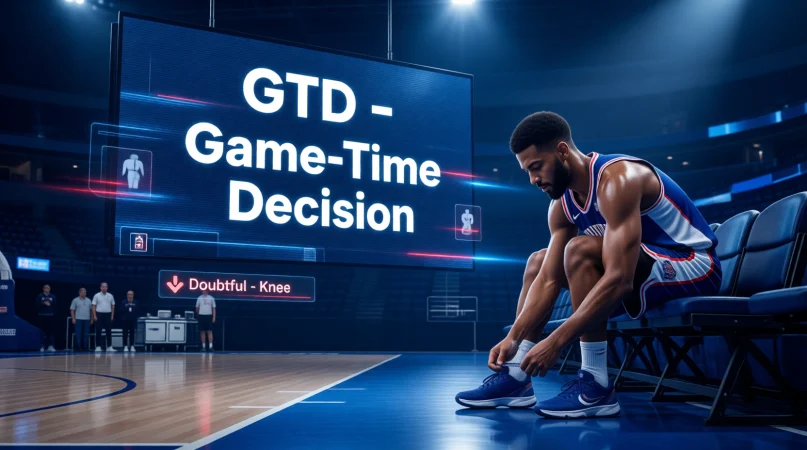
Definition: GTD in basketball stands for “Game-Time Decision.”
It means a player’s availability for a game is uncertain and will be decided shortly before tip-off, usually after warmups or a final medical evaluation.
Ever checked a basketball box score, injury report, or fantasy app and seen “GTD” next to a player’s name and felt unsure what it really means? You’re not alone. GTD is one of the most common (and most stressful 😅) abbreviations in basketball, especially for fans, bettors, and fantasy managers waiting on lineup news.
In this complete guide, we’ll break down what GTD means in basketball, where it came from, how it’s used in real games, how it affects teams and fantasy lineups, and how it compares to similar injury designations. By the end, you’ll know exactly how to read a GTD tag and what to do when you see one.
Why GTD Matters in Basketball
GTD isn’t just a label, it’s a signal. It tells fans, coaches, bettors, and fantasy players that:
- A player might play
- A player might sit
- The final call will come minutes before the game
That uncertainty can affect:
- Team rotations
- Betting odds
- Fantasy basketball lineups
- Media coverage and fan expectations
In today’s NBA, where injury management and load management are common, GTD tags appear almost daily during the season.
What Does GTD Mean in Basketball? (Plain English)
In simple terms:
GTD means the team hasn’t decided yet if the player will play.
The decision depends on factors like:
- Pain tolerance
- Swelling or stiffness
- Warmup performance
- Medical staff approval
- Coaching strategy
A GTD player could:
- Start the game
- Come off the bench
- Be ruled out at the last second
That’s why GTD often causes last-minute chaos especially in fantasy leagues.
Origin of GTD in Basketball
Where Did GTD Come From?
The term Game-Time Decision originated in professional sports reporting, especially in:
- Basketball
- Football
- Hockey
As sports media became more data-driven, leagues needed short, standardized labels to describe player availability. GTD became popular because it clearly communicated uncertainty without committing to “out” or “probable.”
Why It Became So Popular
GTD exploded in popularity due to:
- 24/7 sports news coverage
- Fantasy basketball growth
- Sports betting legalization
- Injury transparency requirements
Today, GTD is a standard injury designation across:
- NBA
- College basketball
- International leagues
- Fantasy platforms like ESPN, Yahoo, FanDuel, and DraftKings
How GTD Is Used in Real Basketball Situations
Injury Reports
GTD appears most often on official injury reports, usually with a brief explanation:
- GTD (ankle soreness)
- GTD (knee contusion)
- GTD (back tightness)
Pre-Game Coverage
Broadcasters often say:
- “He’s listed as a game-time decision tonight.”
- “We’ll know more after warmups.”
Fantasy & Betting Apps
Fantasy platforms highlight GTD players because:
- You may need a backup plan
- Late scratches can cost points or money
Common Reasons a Player Is Listed as GTD
Not every GTD means a serious injury. Common causes include:
- Minor ankle sprains
- Muscle tightness
- Bruises or contusions
- Illness
- Fatigue or load management
- Recovery from a previous injury
Sometimes, GTD is strategic teams may wait to see:
- How the player feels
- Who the opponent is
- Whether rest is smarter long-term
GTD vs Other Basketball Injury Designations
Here’s how GTD compares to other common terms you’ll see:
Basketball Injury Status Comparison Table
| Status | Meaning | Likelihood of Playing |
| GTD | Decision made right before the game | 50/50 |
| Probable | Expected to play | Very high |
| Questionable | Uncertain, but leaning toward playing | Moderate |
| Doubtful | Unlikely to play | Low |
| Out | Will not play | None |
Key takeaway: GTD is more urgent than “questionable” because the decision is truly last-minute.
GTD vs Questionable: What’s the Difference?
This confuses many fans, so let’s clarify:
- Questionable: The team has hours (or even a day) to decide.
- GTD: The decision happens at the arena, often after warmups.
If you’re tracking lineups closely, GTD means:
Stay alert. News is coming soon.
Examples of GTD in Basketball (With Tone)
Neutral / Informational Tone
- “LeBron James is listed as GTD with ankle soreness.”
- “The team will evaluate him during warmups.”
Friendly / Fan Conversation Tone
- “Steph is GTD tonight fingers crossed 🤞”
- “Hope he suits up, we need him!”
Negative / Frustrated Tone
- “Another GTD? Just say he’s out already.”
- “These GTD tags ruin fantasy lineups.”
Labeled Example Table: GTD in Real Context
| Situation | Example | What It Means |
| Injury Report | GTD (hamstring tightness) | Final check before game |
| Fantasy App | GTD icon next to player | Prepare a backup |
| Broadcast | “We’ll see if he goes tonight” | Decision pending |
| Betting Odds | Line shifts late | GTD affecting expectations |
How Coaches and Teams Handle GTD Players
Teams are careful with GTD players because:
- Long-term health matters
- One game isn’t worth a season-ending injury
Coaches may:
- Limit minutes
- Bring the player off the bench
- Pull them quickly if discomfort returns
That’s why even if a GTD player does play, performance can vary.
What GTD Means for Fantasy Basketball Players
If you play fantasy basketball, GTD is a big deal.
Smart GTD Tips for Fantasy Managers
- Always have a backup ready
- Check injury updates 30–60 minutes before tip-off
- Watch beat reporters on social media
- Avoid locking GTD players in early games if possible
A late GTD scratch can mean:
- Zero points
- Missed lineup swap
- Lost matchup
What GTD Means for Sports Betting
For bettors, GTD status can:
- Shift point spreads
- Change over/under totals
- Affect player prop bets
Many bettors wait until:
- Official starting lineups are announced
- GTD status is resolved
Are There Alternate Meanings of GTD?
Yes but not in basketball contexts.
Outside of Sports, GTD Can Mean:
- Getting Things Done (productivity method by David Allen)
- Grand Touring Deluxe (automotive term)
In basketball, however, GTD always means Game-Time Decision.
Polite or Professional Alternatives to Saying GTD
In formal writing or commentary, you might see:
- “His availability will be determined pre-game.”
- “The team will make a late decision.”
- “Final status pending warmups.”
These phrases are often used in:
- Press releases
- Broadcast scripts
- Professional analysis
Frequently Asked Questions
1. What does GTD stand for in basketball?
GTD stands for Game-Time Decision, meaning the player’s status will be decided just before the game.
2. Does GTD mean a player will play?
Not necessarily. GTD means it’s uncertain roughly a 50/50 chance.
3. How late is a game-time decision made?
Usually within 30–60 minutes before tip-off, sometimes even later.
4. Is GTD worse than questionable?
GTD is more urgent but not always more serious. It simply means the decision is delayed until game time.
5. Why do teams list players as GTD?
To allow flexibility based on health, warmups, and strategy.
6. Can a GTD player start the game?
Yes. Some GTD players start, while others come off the bench.
7. Is GTD common in the NBA?
Very common especially during busy schedules or back-to-back games.
8. Should I avoid GTD players in fantasy basketball?
Not always, but you should have a backup plan ready.
Conclusion
Understanding what GTD means in basketball helps you read injury reports like a pro, make smarter fantasy decisions, and follow the game with confidence. While GTD can be frustrating, it’s a necessary part of modern basketball balancing competition with player health.
Next time you see GTD next to a star player’s name, you’ll know exactly what it means and what to watch for next. 🏀

Matthew Nelson is a professional content writer and blogger with a strong focus on creating high-quality and reader-centric content. He specializes in writing informative articles that help websites grow their online visibility while delivering real value to readers.