
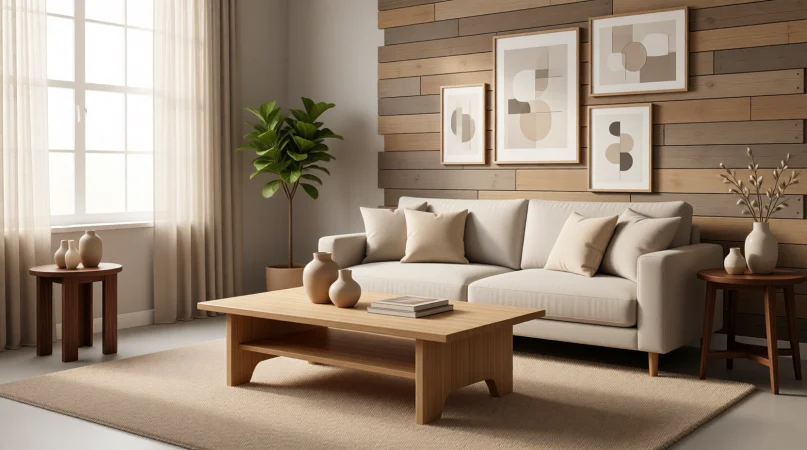
Definition: Harmony in interior design means creating a visually pleasing and balanced space where all elements colors, textures, furniture, lighting, and décor work together cohesively rather than competing for attention.
In short, harmony makes a room feel unified, calm, and intentional.
Harmony is one of those design words you hear all the time but what does it actually mean when you’re decorating a home?
If you’ve ever walked into a room and instantly felt calm, balanced, and comfortable without knowing why, chances are you were experiencing harmony in interior design. It’s the quiet force that makes everything feel like it belongs together, nothing too loud, nothing out of place.
Let’s break it down in a clear, friendly, and practical way so you can recognize harmony, use it confidently, and create spaces that truly feel right.
What Is Harmony in Interior Design?
Harmony in interior design refers to how well the different parts of a room relate to one another. When harmony is present, the space feels natural and effortless even if it’s bold or dramatic.
Harmony doesn’t mean everything looks the same. Instead, it means there’s a clear connection between design elements.
Harmony focuses on:
- Consistency without boredom
- Variety without chaos
- Flow without stiffness
Think of harmony as the emotional glue of a room; it holds everything together.
The Origin and Background of Harmony in Design
The concept of harmony comes from art, music, and classical philosophy.
Historical roots:
- Ancient Greece: Harmony described balance and proportion in art and architecture
- Music theory: Harmony refers to notes that sound good together
- Eastern design philosophies: Feng Shui emphasizes harmonious energy flow
Over time, interior design adopted harmony as a core principle, alongside balance, contrast, rhythm, and emphasis.
Today, harmony is one of the foundational principles taught in design schools worldwide.
Why Harmony Matters in Interior Design
Harmony affects how a space feels emotionally and psychologically.
A harmonious room:
- Feels calm and comfortable
- Is easy on the eyes
- Reduces visual stress
- Feels intentional, not accidental
A room without harmony can feel:
- Busy or cluttered
- Unfinished
- Confusing or overwhelming
Even expensive furniture can look wrong if harmony is missing.
Key Elements That Create Harmony in Interior Design
Harmony isn’t about one thing it’s about how multiple elements interact.
1. Color Harmony
Colors should relate to each other in tone, temperature, or intensity.
Examples:
- Soft neutrals layered together
- Different shades of the same color
- Complementary colors used thoughtfully
🎨 Tip: Stick to 2–3 main colors and repeat them subtly throughout the room.
2. Material and Texture Harmony
Textures add depth, but they should feel intentional.
Examples:
- Wood tones that complement each other
- Mixing soft fabrics with structured surfaces
- Repeating textures (linen, leather, metal)
Too many unrelated textures can break harmony fast.
3. Furniture Style Harmony
Furniture doesn’t need to match but it should relate.
Harmonious furniture:
- Shares similar lines (curved or straight)
- Fits the same era or vibe
- Feels consistent in scale
A sleek modern sofa next to an ornate antique chair? That’s contrast but without balance, harmony may suffer.
4. Proportion and Scale
Objects should feel “right-sized” for the room and for each other.
Harmony breaks when:
- Furniture is too large for the space
- Accessories are too small to make an impact
- Heights feel random
📏 Design rule: Vary sizes, but keep proportions visually balanced.
5. Lighting Harmony
Lighting should support the mood and function of the room.
Harmonious lighting:
- Uses consistent color temperatures
- Layers ambient, task, and accent lighting
- Matches the room’s style
Lighting clashes can instantly disrupt harmony.
Real-World Examples of Harmony in Interior Design
Example 1: Living Room (Friendly & Warm Tone 😊)
A neutral sofa, wood coffee table, soft rug, and warm lighting all in similar tones create a relaxed, welcoming space.
Why it works:
- Repeated materials
- Consistent color temperature
- Balanced furniture sizes
Example 2: Minimalist Bedroom (Neutral & Calm)
White walls, light oak furniture, linen bedding, and soft gray accents.
Why it works:
- Limited color palette
- Consistent textures
- Simple shapes
Example 3: Disharmonious Space (Negative/Dismissive Tone 🚫)
A neon accent wall, heavy dark furniture, shiny chrome lights, and floral curtains all in one room.
Why it fails:
- Competing styles
- No visual connection
- Overuse of statement elements
Harmony vs Balance vs Unity: What’s the Difference?
These terms are often confused, but they’re not the same.
Comparison Table: Harmony and Related Design Terms
| Term | Meaning | Key Focus |
| Harmony | Elements work well together | Cohesion |
| Balance | Visual weight is evenly distributed | Stability |
| Unity | Everything feels like one complete idea | Wholeness |
| Contrast | Differences add interest | Variety |
| Rhythm | Repetition creates movement | Flow |
🧠 Quick takeaway:
Balance supports harmony. Unity strengthens it. Contrast spices it up.
Harmony vs Contrast: Can They Coexist?
Yes and they should.
Harmony doesn’t eliminate contrast. Instead, it controls it.
Good contrast:
- Adds interest
- Highlights focal points
- Prevents boredom
Bad contrast:
- Feels random
- Breaks visual flow
- Distracts the eye
🎯 The trick is using contrast within a harmonious framework.
Alternate Meanings of Harmony
While we’re focused on interior design, harmony also means:
- Musical agreement between notes
- Peaceful relationships between people
- Visual balance in art
In every case, the core idea remains the same: things working well together.
Professional and Polite Alternatives to “Harmony” in Design Language
In professional settings, designers may use alternate terms depending on tone or audience.
Common alternatives:
- Cohesion
- Visual consistency
- Unified design
- Flow
- Balanced aesthetic
Each carries a slightly different emphasis, but all relate closely to harmony.
How to Create Harmony in Your Own Space
You don’t need a designer to create harmony, you need intention.
Easy, real-life tips:
- Choose a color palette and stick to it
- Repeat materials across the room
- Limit statement pieces
- Match lighting temperatures
- Edit regularly remove what doesn’t fit
🛋️ Rule of thumb: If something feels “off,” it probably is.
Common Mistakes That Break Harmony
Avoid these design traps:
- Mixing too many styles at once
- Ignoring scale and proportion
- Overusing bold colors
- Buying furniture without a plan
- Treating each room element separately
Harmony happens when you design holistically, not piece by piece.
FAQ:
1. What is harmony in interior design in simple words?
Harmony means everything in a room looks good together and feels balanced.
2. Is harmony the same as matching?
No. Harmony allows variety, while matching often looks identical and boring.
3. Can a colorful room still be harmonious?
Yes, if the colors relate and are used consistently.
4. Why does my room feel cluttered even when it’s clean?
Lack of harmony too many unrelated styles, colors, or textures.
5. How do designers achieve harmony?
By planning color palettes, repeating materials, and balancing scale.
6. Does harmony matter in small spaces?
Even more. Small rooms feel chaotic quickly without harmony.
7. Can modern and traditional styles be harmonious together?
Yes, if there’s a clear connection in color, scale, or material.
8. What’s the fastest way to improve harmony?
Remove items that don’t match the room’s overall style or palette.
Conclusion:
Harmony is what transforms a room from a collection of objects into a cohesive, comfortable living space.
It doesn’t demand perfection or expensive furniture. It asks for:
- Thoughtful choices
- Visual connections
- Intentional repetition
When harmony is present, your space feels calm, balanced, and truly yours.
If you remember one thing, let it be this:
Good design isn’t loud it’s harmonious.
Read more Articles About:
- TM in Messaging: What It Means and How to Use It In 2026
- What Does Chula Mean in Spanish? Definition, Usage And Cultural Context In 2026

Justin Young is a passionate Digital Creator and Content Writer who specializes in crafting engaging, informative, and results-driven content. He focuses on creating high-quality, blog posts, and digital content that capture attention and deliver real value to readers. With a strong interest in storytelling, trends, and online growth, Justin helps brands and individuals connect with their audiences through clear, impactful, and creative writing.