
Definition:
HGB in a blood test stands for hemoglobin, a protein found in red blood cells that carries oxygen from your lungs to the rest of your body and returns carbon dioxide back to your lungs to be exhaled. Hemoglobin levels help doctors detect conditions such as anemia, dehydration, and certain blood disorders.
Have you ever looked at your blood test results and seen the abbreviation HGB then wondered what it actually means? You’re not alone. Blood work reports can feel like reading a foreign language, filled with abbreviations like RBC, WBC, HCT, and more.
But here’s the good news: HGB is one of the most important numbers on your blood test. It tells your doctor how well your body is carrying oxygen something every cell in your body depends on.
In this comprehensive guide, we’ll break down:
- What HGB means in a blood test
- Normal hemoglobin levels for men, women, and children
- What high or low HGB levels indicate
- How it compares to related blood test terms
- Real-world examples of how doctors use it
- FAQs people commonly search about hemoglobin
Let’s make your lab report easier to understand step by step.
What Does HGB Mean in a Blood Test?
HGB stands for hemoglobin, the iron-containing protein inside red blood cells.
What Hemoglobin Does
Hemoglobin has one major job:
🫁 Carry oxygen from your lungs to tissues throughout your body.
It also helps:
- Transport carbon dioxide back to the lungs
- Maintain proper blood pH balance
- Support energy production
Without enough hemoglobin, your organs don’t get enough oxygen and that’s when symptoms like fatigue, weakness, and dizziness can appear.
Origin of the Term Hemoglobin
The word hemoglobin comes from two parts:
- Heme → from Greek haima, meaning blood
- Globin → referring to a type of protein
So literally, hemoglobin means blood protein.
The abbreviation HGB is used in medical laboratory reports to make documentation faster and more standardized worldwide. It’s part of the Complete Blood Count (CBC) panel one of the most commonly ordered blood tests globally.
Why HGB Is So Important in Real-World Medical Practice
Doctors rely heavily on HGB levels because it helps them:
- Detect anemia
- Monitor blood loss
- Assess hydration status
- Evaluate chronic diseases
- Track treatment progress
- Screen before surgery
For example:
- If someone feels constantly tired and weak, a low HGB level may confirm anemia.
- Before surgery, doctors check HGB to ensure the patient has enough oxygen-carrying capacity.
- In emergency situations, low HGB may signal internal bleeding.
In short: HGB is a quick snapshot of your body’s oxygen delivery system.
Normal HGB Levels (By Age & Gender)
Hemoglobin levels vary based on age, sex, and sometimes altitude.
Normal Hemoglobin Reference Ranges
| Group | Normal HGB Level (g/dL) |
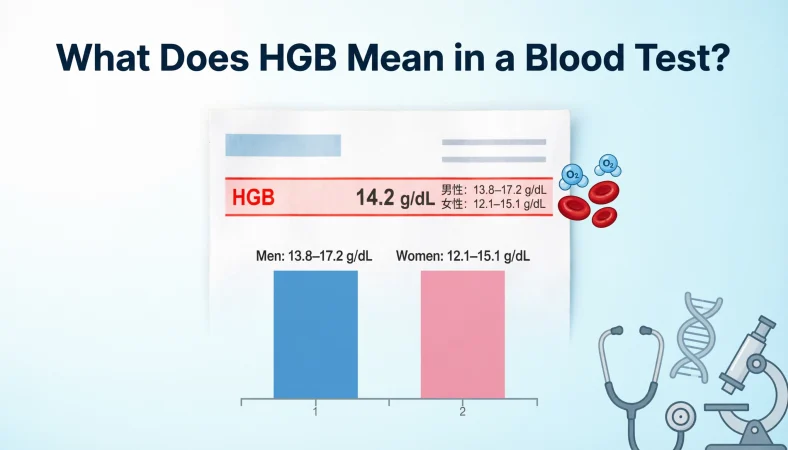
| Adult Men | 13.8 – 17.2 g/dL |
| Adult Women | 12.1 – 15.1 g/dL |
| Pregnant Women | 11.0 g/dL or higher |
| Children | 11.0 – 16.0 g/dL |
| Newborns | 14 – 24 g/dL |
Note: These ranges may vary slightly depending on the laboratory.
What Does Low HGB Mean?
Low HGB usually indicates anemia.
Common Causes of Low Hemoglobin
- Iron deficiency
- Vitamin B12 deficiency
- Folate deficiency
- Blood loss (heavy periods, surgery, injury)
- Chronic kidney disease
- Bone marrow disorders
- Chronic illnesses
Symptoms of Low HGB
- Fatigue 😴
- Shortness of breath
- Pale skin
- Headaches
- Cold hands and feet
- Dizziness
Example Scenario
Sarah feels tired all the time and struggles to concentrate. Her blood test shows:
- HGB: 9.8 g/dL
- Normal range for women: 12.1–15.1 g/dL
Her doctor diagnoses iron-deficiency anemia and prescribes iron supplements.
Tone context: Neutral and clinical. There’s no emotional meaning just medical data.
What Does High HGB Mean?
High hemoglobin levels are less common but still important.
Possible Causes of High HGB
- Dehydration
- Living at high altitude
- Smoking
- Lung disease
- Polycythemia vera (a blood disorder)
- Excess testosterone use
Symptoms of High HGB
- Headaches
- Dizziness
- Blurred vision
- Itching
- High blood pressure
Example Scenario
Ali lives in a mountainous area. His HGB reads 18.5 g/dL.
His doctor explains that higher altitude naturally increases hemoglobin because the body produces more red blood cells to compensate for lower oxygen levels.
HGB vs Other Related Blood Test Terms
Blood test reports often include related abbreviations. Let’s compare them clearly.
Comparison Table: HGB vs Related Terms
| Term | Full Form | What It Measures | Why It Matters |
| HGB | Hemoglobin | Oxygen-carrying protein in RBCs | Detects anemia |
| RBC | Red Blood Cells | Number of red blood cells | Oxygen transport capacity |
| HCT | Hematocrit | % of blood made up of RBCs | Blood concentration |
| MCV | Mean Corpuscular Volume | Size of RBCs | Identifies anemia type |
| WBC | White Blood Cells | Immune cells | Detects infection |
Key Difference
- HGB measures protein concentration
- RBC measures cell count
- HCT measures blood proportion
They are connected but not identical.
Is HGB Part of a CBC Test?
Yes. HGB is included in a Complete Blood Count (CBC).
A CBC test typically measures:
- HGB (Hemoglobin)
- RBC (Red blood cells)
- WBC (White blood cells)
- Platelets
- Hematocrit
- MCV and other indices
Doctors order CBC tests for:
- Routine checkups
- Unexplained fatigue
- Suspected infection
- Pre-surgical screening
- Monitoring chronic disease
Alternate Meanings of HGB
While HGB most commonly means hemoglobin in medical contexts, it may have other meanings in different industries:
- HGB → High-Grade Bond (finance)
- HGB → Hybrid Gaming Business (business sector)
- HGB → Hamburg (stock ticker abbreviation)
However, in healthcare and blood tests, HGB almost always refers to hemoglobin.
Professional Communication & Tone
Unlike slang abbreviations, HGB carries:
- Neutral tone
- Clinical meaning
- Professional context
You would not use HGB casually in everyday conversation. Instead:
Informal:
My iron is low
Professional:
My hemoglobin level is below normal
Doctors typically say:
Your hemoglobin level is slightly low. We’ll run further tests.
How to Improve Low Hemoglobin Levels
If your HGB is low due to iron deficiency:
- Eat iron-rich foods (spinach, red meat, beans)
- Take prescribed supplements
- Increase vitamin C intake for better absorption
- Treat underlying conditions
If levels are high:
- Stay hydrated
- Stop smoking
- Follow medical treatment if diagnosed with a blood disorder
Always consult a healthcare professional before making changes.
FAQs
1. What does HGB mean in a blood test report?
HGB stands for hemoglobin, a protein in red blood cells that carries oxygen throughout the body.
2. What is a normal HGB level?
Normal levels are typically:
- Men: 13.8–17.2 g/dL
- Women: 12.1–15.1 g/dL
Ranges may vary slightly by lab.
3. Is low HGB dangerous?
Yes, if significantly low. It may indicate anemia or blood loss and can lead to fatigue, weakness, and serious complications if untreated.
4. What causes HGB to drop suddenly?
Possible causes include:
- Internal bleeding
- Heavy menstruation
- Surgery
- Nutritional deficiencies
5. Can dehydration affect HGB levels?
Yes. Dehydration can falsely elevate HGB because blood becomes more concentrated.
6. Is HGB the same as iron?
No. Hemoglobin contains iron, but they are not the same. Iron deficiency can lower hemoglobin levels.
7. How fast can hemoglobin levels improve?
With treatment, mild iron-deficiency anemia may improve in a few weeks. Full recovery may take 2–3 months.
8. Should I worry if my HGB is slightly low?
A slightly low level may not be serious but should be evaluated by your doctor to determine the cause.
Conclusion:
If you’ve ever asked, what does HGB mean in a blood test, now you know it’s one of the most important indicators of your overall health.
Here are the key Points:
- HGB stands for hemoglobin, the oxygen-carrying protein in red blood cells.
- It’s part of a standard CBC test.
- Low levels often indicate anemia.
- High levels may suggest dehydration or underlying conditions.
- It works closely with RBC, HCT, and other blood measurements.
Understanding your lab results empowers you to ask better questions and make informed health decisions.
When reviewing your blood test, don’t panic but don’t ignore it either. If something looks outside the normal range, talk to your healthcare provider for proper interpretation.
Your blood tells a story and HGB is one of its most important chapters.

Justin Young is a passionate Digital Creator and Content Writer who specializes in crafting engaging, informative, and results-driven content. He focuses on creating high-quality, blog posts, and digital content that capture attention and deliver real value to readers. With a strong interest in storytelling, trends, and online growth, Justin helps brands and individuals connect with their audiences through clear, impactful, and creative writing.