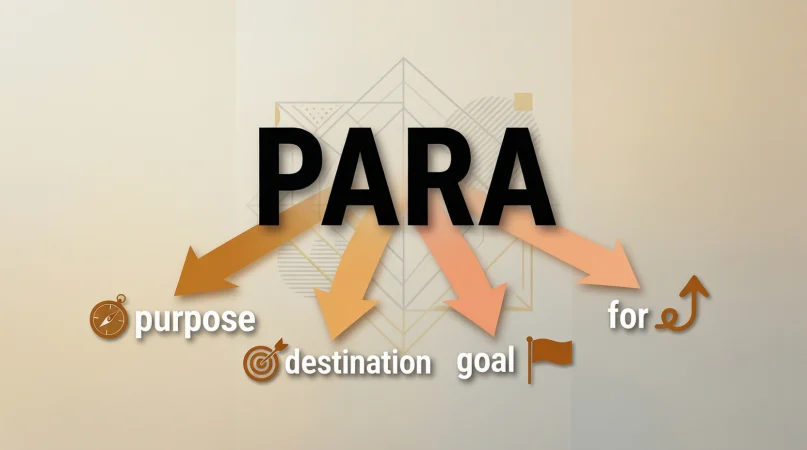
Definition: Para is a Spanish preposition that most commonly means for, to, or in order to. It is used to express purpose, destination, goals, deadlines, recipients, and intended outcomes.
Para is one of the most common and most confusing words in Spanish. If you’ve ever learned Spanish or heard native speakers talk, you’ve probably noticed that para shows up everywhere: in conversations, signs, instructions, and even text messages.
So what does para really mean in Spanish? And how is it different from por, its famous grammatical rival?
Let’s break it all down in a clear, friendly, and practical way no grammar headache required.
In simple terms:
👉 Para answers the question “for what purpose?” or “toward what goal?”
Why Para Matters So Much in Spanish
If Spanish were a city, para would be one of its busiest intersections.
You’ll hear it used to:
- Talk about goals and intentions
- Explain why something is done
- Set deadlines
- Say who something is for
- Describe destinations
Because English often uses for or to for many situations, learners tend to overuse or misuse para especially when por enters the picture. We’ll clear that up soon.
Origin and Linguistic Background of Para
The word para comes from Latin:
- Latin root: per ad
- Meaning: toward, up to, or in the direction of
Over time, this directional sense evolved into the modern Spanish meanings related to purpose, intention, and destination.
This historical background explains why para often feels forward-looking or goal-oriented in meaning.
Core Meanings of Para in Spanish (With Examples)
Let’s walk through the main ways para is used in real Spanish, step by step.
Parato Express Purpose or Intention
This is the most common use.
Structure
Para + infinitive verb
Examples
- Estudio español para aprender más idiomas.
(I study Spanish to learn more languages.) - Trabajo para ganar dinero.
(I work in order to earn money.)
👉 Think: Why is this being done?
If the answer is a goal or intention, para is your friend.
Parato Indicate a Destination
Use para when talking about where someone or something is going.
Examples
- Salimos para Madrid mañana.
(We leave for Madrid tomorrow.) - Este tren va para el centro.
(This train goes downtown.)
This use keeps the original directional meaning from Latin.
Parato Mean “For” a Recipient or Beneficiary
When something is meant for someone, use para.
Examples
- Este regalo es para ti. 🎁
(This gift is for you.) - Compré flores para mi madre.
(I bought flowers for my mother.)
This is about intended recipients, not reasons or causes.
Parato Express Deadlines or Time Limits
If there’s a specific deadline, para is usually correct.
Examples
- El proyecto es para el viernes.
(The project is due by Friday.) - Necesito el informe para mañana.
(I need the report by tomorrow.)
📌 Tip: If the time indicates when something must be finished, think para.
Parato Express Goals, Standards, or Expectations
Sometimes para sets a benchmark or expectation.
Examples
- Es muy alto para su edad.
(He’s very tall for his age.) - Eso es fácil para ella.
(That’s easy for her.)
Here, para introduces a point of comparison or standard.
Tone and Context: Is Para Ever Emotional?
Unlike slang words, para itself is neutral in tone. However, the sentence around it can feel:
- 😊 Friendly
- 😐 Neutral
- 😠 Demanding or urgent
Tone Examples
| Sentence | Tone |
| Esto es para ayudarte. | Friendly |
| Es para mañana. | Neutral |
| Lo quiero para ahora mismo. | Urgent / Demanding |
The word stays neutral the context creates the emotion.
Common Mistake: Para vs Por (Clear Comparison)
This is one of the biggest challenges for Spanish learners.
Quick Rule of Thumb
- Para → purpose, goal, destination
- Por → reason, cause, movement, exchange
Side-by-Side Comparison Table
| Situation | Para | Por |
| Purpose | ✔ | ✘ |
| Destination | ✔ | ✘ |
| Reason/Cause | ✘ | ✔ |
| Duration of time | ✘ | ✔ |
| Deadline | ✔ | ✘ |
| Exchange (money, favors) | ✘ | ✔ |
Example Pair
- Trabajo para vivir.
(I work in order to live.) - Trabajo por dinero.
(I work because of money.)
Same verb. Completely different meaning.
Para in Everyday Spoken Spanish
Native speakers use para constantly, often in short phrases:
- ¿Para qué? – Why? / For what purpose?
- Para nada – Not at all
- Para mí – In my opinion / For me
- Para siempre – Forever ❤️
These expressions are worth memorizing because they’re extremely common.
Alternate Meanings and Uses of Para
While para is mainly a preposition, it can appear in other contexts:
1. Para as Part of a Verb Phrase
- Parar (to stop) → different word, but often confused with para
2. Regional or Informal Shortening
In casual speech, para may sound like:
- pa’
- Esto es pa’ ti.
(This is for you.)
- Esto es pa’ ti.
This is informal and common in spoken Spanish, music, and texting but avoid it in professional writing.
Polite and Professional Alternatives Using Para
Sometimes, you want to sound more formal or polished.
Casual
- Esto es para ti.
Polite / Professional
- Esto está destinado a usted.
- Este documento es para su revisión.
Using para itself is not rude the formality comes from pronouns and structure.
Labeled Example Table: Para in Real-Life Situations
| Situation | Spanish Example | English Meaning |
| Purpose | Estudio para mejorar. | I study to improve |
| Deadline | Es para hoy. | It’s due today |
| Recipient | Es para mi jefe. | It’s for my boss |
| Destination | Voy para casa. | I’m heading home |
| Opinion | Para mí, es correcto. | For me, it’s right |
FAQs:
1. What does para literally mean in Spanish?
It most commonly means for, to, or in order to, depending on context.
2. Is para always translated as “for”?
No. It can also mean to, by, or in order to in English.
3. When should I use para instead of por?
Use para when expressing purpose, destination, goals, or deadlines.
4. Is para formal or informal?
It’s neutral and works in both casual and professional Spanish.
5. Can para be used with verbs?
Yes. It’s commonly followed by an infinitive verb to show purpose.
6. What does para qué mean?
It means why or for what purpose.
7. Is pa’ the same as para?
Yes, but pa’ is informal spoken Spanish only.
8. Do native speakers use para a lot?
Absolutely. It’s one of the most frequently used words in Spanish.
Practical Tips to Master Para
- Think forward: goal, purpose, destination
- Ask yourself: What is this for?
- Practice common phrases like para mí and para qué
- Compare with por often to sharpen accuracy
With repetition, para will start to feel natural.
Conclusion:
Para is a small word with big importance.
At its core, it’s about purpose, intention, and direction where something is going, who it’s for, or why it exists. While it’s often confused with por, remembering that para looks ahead makes it much easier to use correctly.
Master para, and you’ll instantly sound clearer, more natural, and more confident in Spanish.
Read More About:
- What Does Taka Mean in Swahili? Definition, Usage And Examples In 2026
- What Does Wey Mean in Spanish? Definition, Usage, Examples & Cultural Context In 2026

Megan Lewis is a passionate and experienced content writer specializing in creating engaging and well-researched content. She excels at producing clear, informative, and reader-focused content that not only ranks well on search engines but also delivers real value to audiences.