Definition:
In fantasy football, RZ stands for Red Zone. It refers to the area of the field between the opponent’s 20-yard line and the goal line, where scoring chances are highest and fantasy points are often made or broken.
RZ is one of those short fantasy football abbreviations that shows up everywhere player stats, projections, expert rankings and if you’re new (or even semi-experienced), it can feel confusing at first.
So let’s break it all down in plain English
This guide will explain exactly what RZ means in fantasy football, why it matters so much, how it’s used in stats and analysis, and how smart managers use red zone data to win leagues.
Why RZ Matters So Much in Fantasy Football
Fantasy football isn’t just about total yards it’s about opportunity.
And nowhere on the field offers more opportunity than the red zone.
Here’s why fantasy managers obsess over RZ stats:
- Touchdowns happen most often in the red zone
- Players with consistent RZ usage score more fantasy points
- Red zone volume often predicts future breakout games
- Coaches design special plays specifically for RZ situations
A player might not rack up huge yardage, but if they get red zone looks, they can still be a fantasy monster.
What Is the Red Zone in Football?
In real football terms:
- The red zone is the area from the 20-yard line to the end zone
- Offenses are close enough to realistically score
- Defenses tighten coverage and limit big plays
- Play-calling becomes more strategic and aggressive
In fantasy football, anything that happens in this zone carries extra weight.
Origin and Popularity of the Term RZ
The term red zone originated from television broadcasts in the 1980s and 1990s, when networks started highlighting scoring areas in red graphics on the field.
As fantasy football exploded in popularity:
- Stat providers shortened red zone to RZ
- Fantasy apps needed quick, space-saving labels
- Analysts began tracking RZ targets, RZ carries, and RZ touches
Today, RZ is a standard abbreviation across ESPN, Yahoo, Sleeper, NFL.com, and fantasy blogs.
How RZ Is Used in Fantasy Football Stats
You’ll see RZ used in several key fantasy contexts.
Common RZ Stat Categories
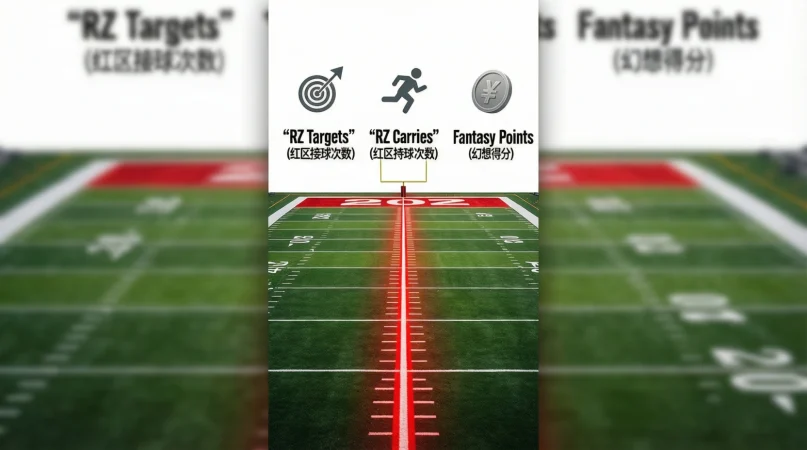
- RZ Targets – Passes thrown to a player inside the 20
- RZ Carries – Rushing attempts inside the 20
- RZ Touches – Total rushes + targets in the red zone
- Inside the 10 / Inside the 5 – Even more valuable subsets
These stats help predict touchdowns better than yardage alone.
Example Table: RZ Stats and What They Mean
| RZ Stat | What It Means | Why It Matters for Fantasy |
| RZ Targets | Passes thrown to a player in the red zone | Predicts receiving TDs |
| RZ Carries | Rush attempts inside the 20 | Key for RB scoring |
| RZ Touches | Total red zone opportunities | Overall TD potential |
| Inside the 5 | Plays within 5 yards of goal line | Highest TD conversion rate |
| End Zone Targets | Passes thrown directly into end zone | Elite WR/TE scoring upside |
Examples of RZ Usage in Fantasy Football Context
Friendly / Analytical Tone
- “This wide receiver only has 60 yards, but he led the team in RZ targets, so his TD upside is strong.”
- “That running back is a must-start; he gets almost all the RZ carries.”
Neutral / Informative Tone
- “The tight end ranks top five in RZ usage among all TEs this season.”
- “Quarterbacks with strong red zone efficiency tend to score more fantasy points.”
Negative or Dismissive Tone
- “He gets yards between the 20s, but his RZ role is basically nonexistent.”
- “Nice volume, but zero red zone looks means limited fantasy ceiling.”
Fantasy managers often use RZ stats to justify starts, sits, and trades.
Why Red Zone Usage Beats Yardage Alone
One of the biggest beginner mistakes in fantasy football is chasing yards instead of touchdown opportunities.
Here’s the truth:
- 100 yards = 10 fantasy points (standard scoring)
- 1 touchdown = 6 fantasy points
- Red zone touches lead directly to touchdowns
A player with:
- 40 yards + 1 TD = 10 points
- 90 yards + 0 TDs = 9 points
That’s why RZ data is gold.
RZ for Different Fantasy Positions
Running Backs (RB)
Red zone carries are especially important for RBs.
- Goal-line backs can score even with low yardage
- Committees often split yardage but not RZ work
- Short-yardage specialists thrive in fantasy
A backup RB with RZ duties can outscore a starter without them.
Wide Receivers (WR)
For WRs, RZ targets tell you who the quarterback trusts near the goal line.
- Taller WRs often dominate end zone looks
- Slot receivers may rack up yards but fewer RZ chances
- Chemistry matters more than speed in tight spaces
RZ targets often explain why a WR scores more TDs than expected.
Tight Ends (TE)
Tight ends live and die by red zone usage.
- Many TEs rely almost entirely on RZ targets
- End zone fades and play-action passes favor TEs
- A TE with low yards but high RZ looks is fantasy-viable
This is why analysts say, “Follow the red zone targets for tight ends.”
Quarterbacks (QB)
For QBs, RZ matters in terms of:
- Passing TDs
- Rushing TDs near the goal line
- Offensive efficiency
Mobile QBs often get designed RZ runs, boosting their fantasy ceiling.
Comparison: RZ vs Related Fantasy Football Terms
| Term | Meaning | How It Differs from RZ |
| RZ | Red Zone (inside the 20) | Focuses on scoring area |
| EZ | End Zone | Final scoring area only |
| GL | Goal Line | Usually inside the 5-yard line |
| Targets | All pass attempts | Includes non-scoring areas |
| Touches | Rushes + catches | Not location-specific |
| Usage Rate | Overall involvement | Doesn’t isolate scoring chances |
RZ is unique because it filters opportunity down to high-value plays.
Alternate Meanings of RZ (Briefly)
Outside fantasy football, RZ can mean:
- Restricted Zone (traffic or legal contexts)
- Response Zone (marketing/UX)
- Renaissance Zone (urban planning)
- RZ as shorthand in gaming or texting (rare)
But in fantasy football discussions, RZ almost always means Red Zone.
Polite or Professional Alternatives to RZ
If you’re writing formally or speaking to beginners, you might use:
- Red zone opportunities
- Scoring area usage
- Inside-the-20 touches
- Goal-line involvement
These are clearer for casual fans or new fantasy players.
How to Use RZ Data to Win Fantasy Leagues
Here are practical tips smart managers use:
- Draft players with consistent RZ roles, not just hype
- Buy low on players with high RZ usage but low TDs
- Sell high on players scoring TDs without RZ volume
- Check RZ trends, not just weekly box scores
- Prioritize RZ RBs in standard and half-PPR formats
Red zone stats often predict future performance better than past touchdowns.
FAQ: What Does RZ Mean in Fantasy Football?
1. What does RZ stand for in fantasy football?
RZ stands for Red Zone, the area from the 20-yard line to the goal line where scoring chances are highest.
2. Why is RZ important in fantasy football?
Because most touchdowns come from red zone plays, and touchdowns drive fantasy scoring.
3. What are RZ targets?
RZ targets are passes thrown to a player while the offense is inside the opponent’s 20-yard line.
4. Are RZ stats better than yardage stats?
Often yes RZ stats are better predictors of touchdowns and fantasy upside.
5. What does inside the 10 or inside the 5 mean?
These are subsets of RZ stats showing even closer scoring opportunities.
6. Do all fantasy platforms use RZ?
Yes. ESPN, Yahoo, Sleeper, and NFL fantasy all track red zone data.
7. Is RZ usage more important for RBs or WRs?
It’s crucial for both, but especially important for RBs and tight ends.
8. Can a player be fantasy-relevant with low yards but high RZ usage?
Absolutely. Many TD-dependent players thrive purely on red zone opportunities.
Conclusion
In fantasy football, RZ stands for “Red Zone,” which refers to the area of the field from the opponent’s 20-yard line to the goal line. This is one of the most critical parts of the field because it’s where teams are closest to scoring and most touchdowns occur there.
For fantasy managers, tracking RZ stats like targets, touches, and touchdowns inside the red zone is a powerful way to gauge a player’s true scoring potential. Players who consistently see action in the RZ tend to produce more fantasy points than those who rack up yards outside it.
Understanding how RZ involvement influences scoring can help you make smarter decisions on draft day, weekly lineup choices, and waiver acquisitions, giving you the edge you need to compete and win in your league.

Justin Young is a passionate Digital Creator and Content Writer who specializes in crafting engaging, informative, and results-driven content. He focuses on creating high-quality, blog posts, and digital content that capture attention and deliver real value to readers. With a strong interest in storytelling, trends, and online growth, Justin helps brands and individuals connect with their audiences through clear, impactful, and creative writing.