
Short answer:
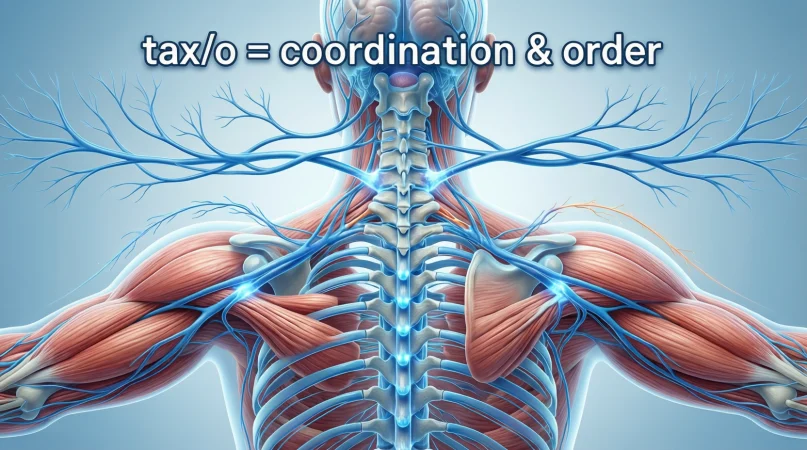
Tax/o is a medical combining form that means order, arrangement, or coordination, especially the orderly movement or coordination of muscles. It comes from the Greek word taxis, meaning arrangement or order, and appears in terms like ataxia (lack of coordination) and taxis (manual repositioning of an organ).
Medical words can look intimidating, but once you understand the building blocks, they start to make sense. Tax/o is one of those small but powerful roots that helps explain how the body moves, coordinates, and organizes motion. If you’ve ever heard a doctor mention ataxia or taxis and wondered what the “tax” part meant don’t worry, it has nothing to do with money 💸.
In this guide, we’ll break down tax/o in plain English, explore where it comes from, how it’s used in real medical settings, and how it compares to similar terms. By the end, you’ll be able to decode medical words with confidence and even explain them to someone else.
What Does Tax/o Mean in Medical Terms? (Clear Definition)
Tax/o is a combining form used in medical terminology that refers to:
- Order
- Arrangement
- Coordination
- Orderly movement, especially of muscles
It is most commonly used when talking about neuromuscular coordination—how well muscles work together under control of the nervous system.
In simple terms:
Tax/o = how movements are organized and coordinated
Origin and History of Tax/o
Understanding the origin of a medical term often makes its meaning much easier to remember.
Greek Roots
- Tax/o comes from the Greek word taxis
- Taxis means:
- Order
- Arrangement
- Placement
- Coordination
Ancient Greek physicians used this concept to describe how the body organizes movement and how parts are arranged or repositioned.
How It Entered Modern Medicine
As medical terminology developed (especially through Latin and Greek influence), tax/o became a standard combining form used in:
- Neurology
- Orthopedics
- General clinical medicine
Today, it’s widely taught in medical, nursing, and allied health education.
Why Is Tax/o Important in Medicine?
Tax/o helps healthcare professionals describe:
- Whether movements are smooth and controlled
- Whether muscle actions are properly coordinated
- Whether body parts are correctly positioned
It is especially important in diagnosing neurological conditions.
Common areas where tax/o appears:
- Brain and nerve disorders
- Muscle coordination problems
- Physical exams and clinical notes
Common Medical Terms That Use Tax/o
Here are the most important and commonly used medical words built with tax/o.
1. Ataxia
Word breakdown:
- a- = without
- tax/o = coordination
- -ia = condition
Meaning:
👉 Loss of coordination, especially in walking or movement.
Real-world example:
A patient with cerebellar damage may have ataxia, causing unsteady walking.
2. Taxia
Meaning:
👉 Coordination or orderly movement of muscles.
This term is less commonly used alone but forms the base of related words.
3. Taxis
Meaning:
👉 Manual repositioning of an organ or body part into its proper place.
Common clinical use:
- Reducing a hernia without surgery
- Repositioning a displaced structure
4. Chemotaxis (related but broader usage)
Meaning:
👉 Movement of cells in response to chemical signals.
Used often in:
- Immunology
- Microbiology
Although not strictly neuromuscular, it still reflects the idea of directed, organized movement.
Example Table: Medical Terms Using Tax/o
| Medical Term | Word Breakdown | Meaning | Common Context |
|---|---|---|---|
| Ataxia | a- + tax/o + -ia | Lack of coordination | Neurology exams |
| Taxia | tax/o + -ia | Coordination | Medical descriptions |
| Taxis | tax/o + -is | Manual repositioning | Hernia reduction |
| Chemotaxis | chemo + taxis | Movement toward chemicals | Immune response |
How Tax/o Is Used in Real Medical Settings
Clinical Diagnosis
Doctors use tax/o-based terms when assessing:
- Gait (how a person walks)
- Balance
- Fine motor skills
Example:
The patient presents with ataxia, suggesting cerebellar dysfunction.
Medical Education
Students learn tax/o early because it connects directly to:
- Nervous system function
- Muscle control
- Clinical observation
Medical Documentation
Tax/o terms help clinicians communicate precise observations quickly and clearly.
Tone and Context Examples (Friendly, Neutral, Clinical)
Medical terms themselves are neutral, but how they’re explained can change the tone.
Neutral / Clinical
- The patient shows signs of ataxia following a stroke.
Friendly / Patient-Facing
- This condition affects your coordination, which doctors call ataxia—it just means your movements aren’t as smooth right now 😊
Serious / Clinical Precision
- Acute onset of truncal ataxia observed during neurological assessment.
Unlike slang or text abbreviations, tax/o terms are not emotional or dismissive—they’re purely descriptive.
Tax/o vs Similar Medical Roots (Important Comparison)
Understanding what tax/o is not helps avoid confusion.
Tax/o vs Kines/o
| Root | Meaning | Focus |
|---|---|---|
| Tax/o | Coordination, order | How movements are organized |
| Kines/o | Movement | Movement itself |
👉 You can move (kines/o) but still lack coordination (tax/o).
Tax/o vs Stas/o
| Root | Meaning |
|---|---|
| Tax/o | Orderly movement |
| Stas/o | Standing still, stopping |
Tax/o vs -taxia
- Tax/o = root/combining form
- -taxia = suffix meaning coordination
Example:
- Ataxia = a- (without) + taxia (coordination)
Alternate Meanings of Tax/o (Outside Medicine)
While tax/o is primarily medical, its Greek root appears elsewhere.
Biology
- Taxonomy (classification of organisms)
⚠️ Important note:
- Taxonomy uses taxis conceptually (order), but it is not a medical term.
Everyday Language
There is no casual or slang meaning of tax/o. If you see it, it’s almost always scientific or medical.
Polite or Professional Alternatives (When Explaining to Patients)
Medical professionals often avoid technical language when speaking to patients.
Instead of saying:
- Ataxia
They might say:
- Coordination problems
- Balance difficulties
- Trouble with smooth movement
This improves patient understanding and comfort.
Usage Tips for Students and Professionals
If you’re learning or using medical terminology, here’s how to remember tax/o easily:
Memory Tips 🧠
- Think “taxi” → orderly transport
- Associate with organized movement
- Remember a-taxia = without coordination
Study Tip
When you see tax/o, ask:
Is this about coordination, order, or positioning?
FAQs
1. What does tax/o mean in medical terms?
Tax/o means order, arrangement, or coordination, especially of muscle movement.
2. Is tax/o related to ataxia?
Yes. Ataxia literally means without coordination, using the tax/o root.
3. Does tax/o have anything to do with taxes or money?
No at all ❌. It comes from Greek, not finance.
4. What body system uses tax/o terms the most?
The nervous system, especially in neurology.
5. What is the difference between taxis and ataxia?
- Taxis = manual repositioning
- Ataxia = lack of coordination
6. Is tax/o still used in modern medicine?
Yes. It appears in diagnoses, textbooks, and clinical documentation.
7. Can tax/o describe cell movement?
Indirectly, yes—terms like chemotaxis describe directed cellular movement.
8. How can I quickly recognize tax/o in a word?
Look for tax, taxis, or taxia within medical terms.
Conclusion
In medical terms, tax/o refers to order, arrangement, and coordination, especially the way muscles and movements are organized by the nervous system. Rooted in the Greek word taxis, this combining form plays a key role in understanding important medical terms like ataxia (loss of coordination) and taxis (manual repositioning of a body part).
Knowing what tax/o means makes it easier to break down complex medical vocabulary, follow neurological discussions, and understand clinical notes or diagnoses. Whenever you see tax/o, -taxia, or taxis in a medical word, think about how movement or positioning is being coordinated or not.
Whether you’re a student, healthcare professional, or simply curious, mastering small roots like tax/o can greatly improve your confidence in understanding medical language and real-world healthcare communication.
Practical Tip
If you ever see a medical word with tax/o, think:
“Is this about coordination or orderly movement?”
That one insight will unlock the meaning instantly.
Read More About:
- What Does DNS Mean in Track? Definition, Usage, Examples and Comparisons 2026
- What Does WYS Mean in Text? Definition, Examples, Usage & Alternatives In 2026

Megan Lewis is a passionate and experienced content writer specializing in creating engaging and well-researched content. She excels at producing clear, informative, and reader-focused content that not only ranks well on search engines but also delivers real value to audiences.