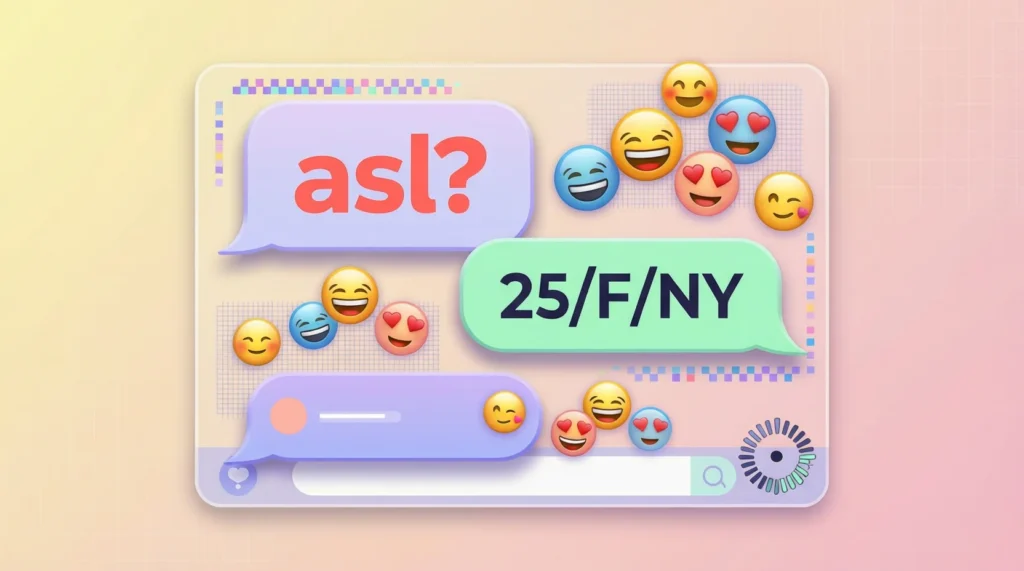
ASL in slang most commonly means Age, Sex, Location. It’s a short question used in online chats or messaging to quickly ask someone basic personal details, especially in casual or anonymous conversations.
If you’ve ever chatted online whether on early internet forums, chat rooms, dating apps, or even modern social media you’ve probably seen someone type “asl?” and wondered what it really meant. Is it rude? Is it flirting? Is it outdated… or still relevant?
The truth is, ASL is one of the oldest and most recognizable internet slang terms, yet it still pops up today in surprising ways. While its core meaning hasn’t changed much, the tone, context, and acceptability of ASL have evolved over time.
In this in-depth guide, we’ll break down what ASL means in slang, where it came from, how people use it today, when it’s appropriate (and when it’s not), and how it compares to similar terms. You’ll also see real-world examples, alternatives, FAQs, and practical tips everything you need to understand ASL like a pro.
What Does ASL Mean in Slang?
Primary Meaning
In slang, ASL stands for:
- Age
- Sex
- Location
It’s usually asked as a single shorthand question to learn quick details about someone in an online conversation.
How It’s Typically Used
- In chat rooms
- In private messages
- On dating platforms
- In anonymous or casual online spaces
Example:
Hey, asl?
This translates to:
What’s your age, gender, and where are you from?
The Origin of ASL Slang
Where Did ASL Come From?
ASL dates back to the early days of the internet, particularly the 1990s and early 2000s, when platforms like:
- AOL Chat Rooms
- Yahoo Chat
- MSN Messenger
- IRC (Internet Relay Chat)
were extremely popular.
Back then, people often chatted anonymously, so asking ASL was a fast way to decide:
- Who you were talking to
- Whether you wanted to continue the conversation
Why ASL Became Popular
- Typing speed mattered
- Internet culture favored abbreviations
- People wanted quick personal context
ASL became a universal icebreaker in online chats.
Is ASL Still Used Today?
Modern Popularity
While ASL isn’t as dominant as it once was, it hasn’t disappeared. You’ll still see it:
- On dating apps
- In gaming chats
- In anonymous forums
- In meme culture (sometimes ironically)
However, its tone has shifted.
How ASL Is Viewed Now
- Can feel outdated to younger users
- Sometimes considered too direct or intrusive
- Still common in casual or flirtatious contexts
How ASL Is Used in Real Conversations
ASL can feel friendly, neutral, or uncomfortable, depending on how and where it’s used.
Friendly or Casual Use
Used when both people expect informal conversation.
Example:
You seem cool 🙂 asl?
Tone: Curious and friendly
Neutral Use
Often seen in anonymous or public chats.
Example:
asl
Tone: Straightforward, emotionless
Negative or Dismissive Use
Can feel abrupt or creepy if used too early.
Example:
asl??
Tone: Pushy or intrusive
Tip: Adding emojis or polite wording can soften the message.
Labeled Example Table: ASL in Context
| Situation | Message | Tone | Interpretation |
| Chat room intro | asl? | Neutral | Asking basic details |
| Dating app | Hey 😊 asl? | Friendly | Light flirting |
| Random DM | asl?? | Negative | Too direct or pushy |
| Gaming chat | lol asl | Casual | Making conversation |
ASL vs Similar Slang Terms
ASL isn’t alone. Several slang terms serve similar purposes.
Comparison Table
| Term | Meaning | Usage Context |
| ASL | Age, Sex, Location | Chat rooms, dating |
| A/S/L? | Same as ASL | Older internet style |
| WYA | Where you at | Casual texting |
| HMU | Hit me up | Inviting conversation |
| WYD | What you doing | Friendly check-in |
Key Difference:
ASL asks personal identity details, while others focus on current activity or location only.
Alternate Meanings of ASL
Although rare in casual slang, ASL can mean other things depending on context.
Other Meanings
- American Sign Language (very common in educational contexts)
- As Hell (slang emphasis, e.g., cool asl)
- Age, Status, Location (less common variation)
Important:
Context always determines meaning. In casual chatting, Age, Sex, Location is still the default interpretation.
Is Asking ASL Appropriate?
When It’s Usually Okay
- Mutual conversations
- Dating apps
- Anonymous chat platforms
- After a greeting or small talk
When It’s Not Recommended
- Professional settings
- Work-related chats
- Social media DMs with strangers
- Conversations involving minors
Rule of Thumb:
If you wouldn’t ask it face-to-face, don’t ask it online.
Polite and Professional Alternatives to ASL
If ASL feels too blunt, here are better alternatives:
More Polite Options
- How old are you, if you don’t mind me asking?
- Where are you based?
- What’s your background?
- Are you local or from somewhere else?
Professional Alternatives
- Could you share a bit about yourself?
- Where are you located geographically?
- Would you mind introducing yourself?
Using full sentences shows respect and social awareness.
How to Respond to ASL
You’re not required to answer everything.
Common Responses
- 25/M/NY
- 21/F/UK
- Prefer not to share 🙂
- Why do you ask?
Safety Tip
Never share:
- Exact addresses
- Personal identifiers
- Sensitive details
ASL in Modern Internet Culture
ASL sometimes appears ironically or humorously today.
Examples:
- This movie is good asl (meaning as hell)
- Memes referencing old chat room culture
- Nostalgic internet jokes
Its usage today often signals:
- Casual tone
- Internet-savvy personality
- Playful nostalgia
FAQs:
1. What does ASL mean in slang?
ASL stands for Age, Sex, Location and is used to ask basic personal details in online chats.
2. Is ASL rude to ask?
It can be, depending on timing and context. Asking too early may feel intrusive.
3. Is ASL still used today?
Yes, though it’s less common and often seen as outdated or informal.
4. What does ASL mean in texting?
In texting, ASL usually means Age, Sex, Location unless context suggests otherwise.
5. Can ASL mean American Sign Language?
Yes, but only when the conversation is about communication or disabilities.
6. Is ASL used on dating apps?
Yes, though many users prefer more polite alternatives now.
7. How should I respond to ASL safely?
Share only what you’re comfortable with or politely decline.
8. What are better alternatives to ASL?
Full questions like Where are you from or Tell me about yourself work better.
Conclusion
ASL, short for Age, Sex, Location, is one of the internet’s earliest slang terms and a clear example of how online communication has evolved over time. While it once served as a quick and practical way to break the ice in chat rooms, its use today depends heavily on context, timing, and tone. In some casual or dating-related spaces, ASL may still feel normal, but in many modern conversations it can come across as too direct or outdated.
Understanding what ASL means and how it’s perceived helps you navigate digital conversations more confidently. If you choose to use it, softening the message with polite wording or emojis can make a big difference. In many cases, however, asking full, respectful questions is a better and more socially aware approach.
The key takeaway is simple: communication works best when it’s respectful, clear, and comfortable for everyone involved. Knowing when to use ASL and when to avoid it ensures your online interactions stay friendly, safe, and positive.

Rachel King is a seasoned content expert with extensive experience in creating engaging, high-quality, and better content across multiple niches. She specializes in content strategy, digital storytelling, and content optimization for websites, blogs, and social media platforms. With a keen eye for detail and a deep understanding of audience behavior, Rachel crafts content that not only informs but also converts and drives engagement.