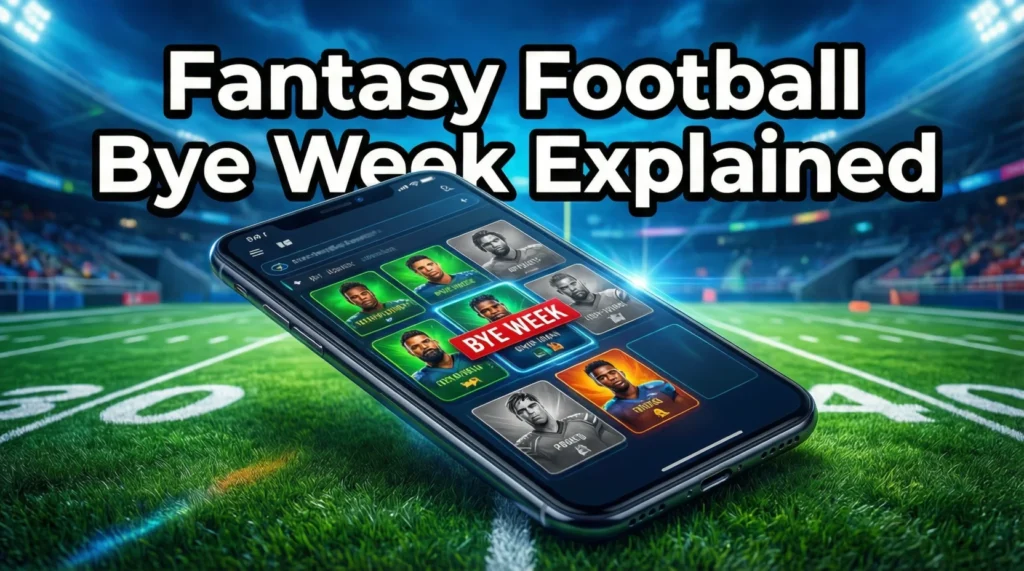
In fantasy football, a bye refers to a week during the NFL season when a real-life team does not play a game, meaning all fantasy players from that team score zero points for that week and cannot be used in your fantasy lineup.
If you’ve ever opened your fantasy app and wondered why your star quarterback suddenly isn’t available, chances are it’s a bye week.
Fantasy football is all about strategy, timing, and smart decisions. You can draft the best team in your league, but one overlooked detail bye weeks can cost you crucial matchups.
Imagine setting your lineup, feeling confident, and then realizing on Sunday morning that three of your starters aren’t playing. No injury. No benching. Just… bye.
Understanding what a bye means in fantasy football and how to plan for it can be the difference between making the playoffs or watching from the sidelines.
This guide breaks it all down in clear, friendly language so you’ll never be caught off guard again.
What Does “Bye” Mean in Fantasy Football?
In fantasy football:
- A bye means an NFL team has the week off
- Players on that team do not play
- Fantasy managers cannot start those players
- If you do start them, they score 0 fantasy points
This is known as a bye week.
Why Do Bye Weeks Exist in the NFL?
Bye weeks aren’t random. They exist to protect players and improve the quality of the game.
Main reasons for bye weeks:
- Player rest and recovery
- Reduced injury risk
- Improved competitive balance
- Longer NFL season sustainability
The NFL usually schedules bye weeks between Weeks 5–14, with teams rotating weeks off.
Fantasy football simply mirrors the real NFL schedule.
Origin and Popularity of the Bye Week Concept
Where did the term “bye” come from?
The word bye comes from tournament structures, where a team advances automatically without playing a round. In sports scheduling, it evolved to mean a scheduled week off.
Why is it so popular in fantasy football discussions?
Because bye weeks:
- Affect lineup decisions
- Influence draft strategy
- Can swing weekly matchups
- Create trade opportunities
In short, bye weeks add another strategic layer that fantasy players love and fear.
How Bye Weeks Work in Fantasy Football Leagues
What happens during a bye week?
- Your player stays on your roster
- You can bench them
- They automatically score 0 points
- You must use a replacement player
Important note:
Bye weeks are not injuries and not suspensions they’re scheduled breaks.
Example Table: How Bye Weeks Affect Your Lineup
Example: Week 7 Fantasy Matchup
| Player Name | NFL Team | Bye Week | Can You Start Them? | Fantasy Points |
| Josh Allen | Bills | Week 7 | ❌ No | 0 |
| Tyreek Hill | Dolphins | Week 10 | ✅ Yes | Based on performance |
| Travis Kelce | Chiefs | Week 10 | ❌ No | 0 |
| Backup TE | Raiders | None | ✅ Yes | Based on performance |
Lesson: Always check bye weeks before locking your lineup.
Common Bye Week Mistakes Fantasy Managers Make 😬
Even experienced players slip up. Here are the most common errors:
- Forgetting to check bye weeks
- Starting a player on bye accidentally
- Drafting too many stars with the same bye
- Waiting too long to add replacements
- Overreacting and dropping elite players
Smart managers plan ahead, not panic.
Bye Week Strategy Tips
1. Check Bye Weeks Before You Draft
Avoid stacking too many top players with the same bye week.
2. Use Your Bench Wisely
Keep flexible players who can fill in during bye weeks.
3. Plan 2–3 Weeks Ahead
Look at upcoming matchups and byes, not just the current week.
4. Don’t Drop Stars
A bye week is temporary. Talent wins long-term.
5. Use the Waiver Wire Strategically
Target short-term replacements with good matchups.
Examples of “Bye” in Fantasy Football Context
Friendly Tone
- “Don’t worry Mahomes is just on a bye this week 😄”
Neutral/Informational
- “Josh Allen is unavailable due to his team’s bye.”
Frustrated or Dismissive
- “Great… half my team is on bye this week 🙄”
In fantasy football chats, “bye” usually carries a strategic or mildly annoying tone, not emotional weight.
Bye Week vs Injury: What’s the Difference?
| Feature | Bye Week | Injury |
| Scheduled? | ✅ Yes | ❌ No |
| Duration | 1 week | Varies |
| Player Health | Healthy | Injured |
| Predictable | ✅ Yes | ❌ No |
| Drop Risk | Low | Medium–High |
Fantasy tip: Bye weeks are easier to manage than injuries because you can plan for them.
Related Terms You Should Know
Bye Week
A scheduled week off for an NFL team.
Waiver Wire
Where you pick up replacement players.
Bench
Where inactive or backup players sit.
IR (Injured Reserve)
For injured players, not bye weeks.
Flex Spot
A position that allows lineup flexibility during byes.
Alternate Meanings of “Bye”
Outside fantasy football, “bye” can mean:
- A friendly goodbye (“Bye, see you later!”)
- Automatic advancement in tournaments
- Informal chat sign-off
In fantasy football, however, bye always means no game, no points.
Polite or Professional Alternatives
In writing or analysis, you might see:
- Scheduled rest week
- Week off
- Team is inactive this week
- Player unavailable due to bye
All mean the same thing in fantasy contexts.
FAQs:
1. What happens if I start a player on a bye week?
They score 0 fantasy points.
2. Can I drop a player just because of a bye?
You can, but it’s usually a bad idea for top players.
3. How many bye weeks are there in fantasy football?
Each NFL team gets one bye week per season.
4. Do bye weeks affect playoff weeks?
Typically no, but always check your league settings.
5. Should I trade players to avoid bye weeks?
Only if it improves your team overall not just short-term.
6. Are bye weeks the same every season?
No. Bye week schedules change every year.
7. Can a team have more than one bye?
No. Each team has one bye per season.
8. Where can I check bye weeks easily?
Your fantasy app, NFL schedule pages, or league tools.
Conclusion:
So, what does bye mean in fantasy football?
It means a player’s team isn’t playing that week with no stats, no points, and no excuses.
But with preparation, bye weeks don’t have to hurt your season. In fact, they can sharpen your strategy, improve your roster management, and give you an edge over less-prepared opponents.

Justin Young is a passionate Digital Creator and Content Writer who specializes in crafting engaging, informative, and results-driven content. He focuses on creating high-quality, blog posts, and digital content that capture attention and deliver real value to readers. With a strong interest in storytelling, trends, and online growth, Justin helps brands and individuals connect with their audiences through clear, impactful, and creative writing.