
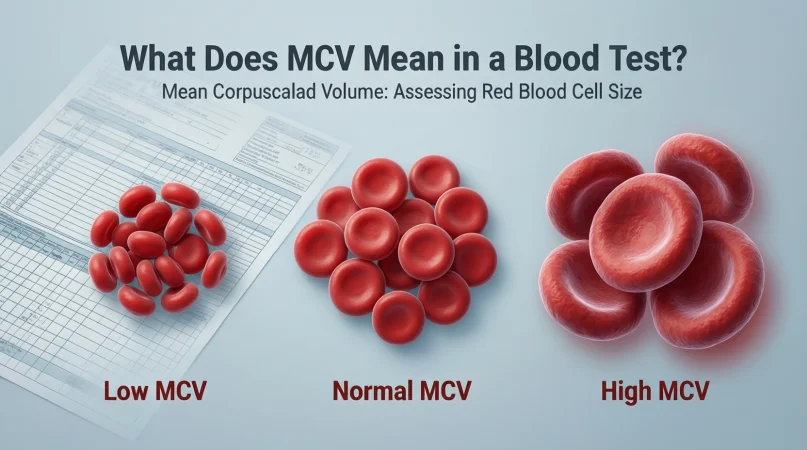
MCV (Mean Corpuscular Volume) is a blood test measurement that shows the average size of your red blood cells. It helps doctors determine the type of anemia you may have and assess overall red blood cell health.
MCV is one of those lab abbreviations that often shows up on blood test reports and leaves people wondering what it actually means and whether they should worry. If you’ve ever glanced at your complete blood count (CBC) and paused at “MCV,” you’re not alone.
Let’s break it down in a clear, friendly, and practical way, so you understand what MCV means, why doctors check it, and how to interpret your results with confidence.
What Is MCV in a Blood Test?
MCV stands for Mean Corpuscular Volume.
It is a standard part of a Complete Blood Count (CBC) test.
In simple terms:
- MCV tells how big or small your red blood cells are
- It is measured in femtoliters (fL)
- It helps doctors understand why your red blood cells might not be working properly
Red blood cells carry oxygen throughout your body. If they are too small or too large, oxygen delivery can suffer—leading to fatigue, weakness, or other symptoms.
Why Is MCV Important?
MCV is not just a number—it’s a diagnostic clue.
Doctors use MCV to:
- Classify different types of anemia
- Identify possible nutritional deficiencies
- Detect chronic disease or bone marrow problems
- Guide further testing and treatment decisions
MCV doesn’t usually stand alone. It’s interpreted alongside other CBC values such as hemoglobin, hematocrit, and RDW.
Normal MCV Range (Adults)
Although ranges can vary slightly by lab, the typical adult reference range is:
| MCV Value | Meaning |
|---|---|
| 80–100 fL | Normal red blood cell size |
| Below 80 fL | Microcytic (small cells) |
| Above 100 fL | Macrocytic (large cells) |
💡 Always check the reference range provided by your specific lab, as “normal” can vary slightly.
Labeled Example Table:
| MCV Result | Classification | Common Causes |
|---|---|---|
| 72 fL | Low MCV (Microcytic) | Iron deficiency, thalassemia |
| 88 fL | Normal MCV | Healthy RBC size |
| 104 fL | High MCV (Macrocytic) | Vitamin B12 deficiency, liver disease |
What Does a Low MCV Mean?
A low MCV means your red blood cells are smaller than normal. This is known as microcytosis.
Common Causes of Low MCV
- Iron deficiency anemia (most common)
- Chronic blood loss (heavy periods, GI bleeding)
- Thalassemia (genetic condition)
- Chronic inflammatory disease
- Lead poisoning (rare but possible)
Typical Symptoms
- Fatigue 😴
- Pale skin
- Shortness of breath
- Headaches
- Cold hands and feet
What Does a High MCV Mean?
A high MCV means your red blood cells are larger than normal—a condition called macrocytosis.
Common Causes of High MCV
- Vitamin B12 deficiency
- Folate deficiency
- Liver disease
- Alcohol use disorder
- Hypothyroidism
- Certain medications (chemotherapy, anticonvulsants)
Possible Symptoms
- Weakness
- Tingling in hands or feet
- Memory or concentration issues
- Pale or yellowish skin
MCV and Anemia: How They’re Connected
MCV helps doctors classify anemia, which is essential for proper treatment.
Types of Anemia Based on MCV
- Microcytic anemia → Low MCV
- Normocytic anemia → Normal MCV
- Macrocytic anemia → High MCV
Each type has different causes and treatments, which is why MCV is so valuable.
MCV vs Other Blood Test Terms
MCV is often confused with other red blood cell indices. Here’s how they differ:
| Term | Full Form | What It Measures |
|---|---|---|
| MCV | Mean Corpuscular Volume | Average RBC size |
| MCH | Mean Corpuscular Hemoglobin | Hemoglobin per RBC |
| MCHC | Mean Corpuscular Hemoglobin Concentration | Hemoglobin density in RBC |
| RDW | Red Cell Distribution Width | Variation in RBC size |
| Hemoglobin | — | Oxygen-carrying protein |
👉 MCV focuses on size, while others focus on hemoglobin content and variation.
Real-World Usage of MCV in Medical Practice
MCV is widely used in:
- Routine health checkups
- Diagnosing anemia
- Monitoring chronic diseases
- Evaluating nutritional deficiencies
- Pregnancy care
- Older patient assessments
It’s one of the most commonly ordered lab values worldwide, making it a cornerstone of modern diagnostics.
Origin and Medical History of MCV
The concept of measuring red blood cell size emerged in the mid-20th century with the development of automated blood analyzers.
Before automation:
- Doctors manually examined blood smears
- Cell size estimates were subjective
Today:
- MCV is calculated precisely using automated counters
- Results are standardized, fast, and reliable
This advancement transformed how anemia and blood disorders are diagnosed.
Examples of MCV in Context
Unlike slang terms, MCV is a clinical and neutral term, but tone still matters depending on context.
Neutral (Medical Report)
“The patient’s MCV is 76 fL, indicating microcytic anemia.”
Professional (Doctor–Patient Conversation)
“Your MCV is slightly low, which often suggests iron deficiency. We’ll confirm with further tests.”
Friendly Explanation
“MCV just tells us the size of your red blood cells—yours are a bit small, so we’ll figure out why 😊”
Can MCV Be Normal but You Still Feel Unwell?
Yes—absolutely.
A normal MCV does not rule out anemia or illness.
Possible reasons:
- Early-stage anemia
- Mixed deficiencies (iron + B12)
- Chronic disease anemia
- Acute blood loss
This is why doctors look at the whole CBC, not just one number.
How to Improve Abnormal MCV Levels
Treatment depends on the cause, not just the number.
If MCV Is Low
- Iron-rich foods (spinach, red meat, lentils)
- Iron supplements (only if prescribed)
- Treat underlying blood loss
If MCV Is High
- Vitamin B12 or folate supplementation
- Reduce alcohol intake
- Review medications
- Treat thyroid or liver conditions
⚠️ Never self-medicate based on MCV alone—always consult a healthcare professional.
Alternate Meanings of MCV
While MCV most commonly means Mean Corpuscular Volume, it can have other meanings in different fields:
- MCV (Motor Control Valve) – Engineering
- MCV (Multi-Channel Video) – Technology
- MCV (Model-Controller-View) – Software architecture (rare)
👉 In blood tests, MCV almost always refers to Mean Corpuscular Volume.
Professional Alternatives to Saying “MCV Is High/Low”
In medical or formal writing, professionals may say:
- “Red blood cells are macrocytic”
- “Evidence of microcytosis”
- “Abnormal erythrocyte indices”
- “Altered red cell morphology”
These sound more clinical and precise, especially in reports.
FAQs
1. What does MCV mean on a blood test?
MCV measures the average size of your red blood cells and helps classify types of anemia.
2. What is a normal MCV range?
For most adults, normal MCV is between 80 and 100 femtoliters (fL).
3. Is low MCV dangerous?
Low MCV itself isn’t dangerous, but it may indicate iron deficiency or another condition that needs treatment.
4. What causes high MCV levels?
High MCV is often caused by vitamin B12 deficiency, folate deficiency, liver disease, or alcohol use.
5. Can stress affect MCV?
Stress does not directly change MCV, but chronic illness or poor nutrition linked to stress can influence it indirectly.
6. Can MCV change over time?
Yes. MCV can change with treatment, diet, illness, or medication adjustments.
7. Does dehydration affect MCV?
Dehydration may slightly affect blood concentration, but it usually has a minimal direct effect on MCV.
8. Should I worry if my MCV is slightly abnormal?
Mild changes are common and often temporary. Your doctor will interpret MCV along with other lab results.
Conclusion
Understanding what MCV means in a blood test helps you make sense of your lab results without unnecessary worry. MCV simply measures the average size of your red blood cells, giving doctors valuable insight into your overall blood health and helping them identify different types of anemia and related conditions.
A low MCV often points toward iron related issues, while a high MCV may suggest vitamin B12 or folate deficiency, liver concerns, or other underlying factors. However, MCV is not a diagnosis on its own. It works best when evaluated alongside other blood values, symptoms, and your medical history.
The most important takeaway is this: numbers guide decisions, but context matters most. If your MCV is outside the normal range, it doesn’t automatically mean something serious but it does mean further evaluation may be helpful. Always discuss your results with a healthcare professional before making changes to your diet, supplements, or treatment plan.

Justin Young is a passionate Digital Creator and Content Writer who specializes in crafting engaging, informative, and results-driven content. He focuses on creating high-quality, blog posts, and digital content that capture attention and deliver real value to readers. With a strong interest in storytelling, trends, and online growth, Justin helps brands and individuals connect with their audiences through clear, impactful, and creative writing.