Definition: In art, a medium refers to the material or materials an artist uses to create an artwork.
This can include paint, pencil, clay, ink, digital tools, fabric, or even unconventional items like found objects. The plural form is media.
Medium is one of those art terms you’ll hear everywhere from museum labels to art school critiques but it’s often misunderstood. Is it paint? Style? Technique? Size? 🤔
Let’s clear it up properly.
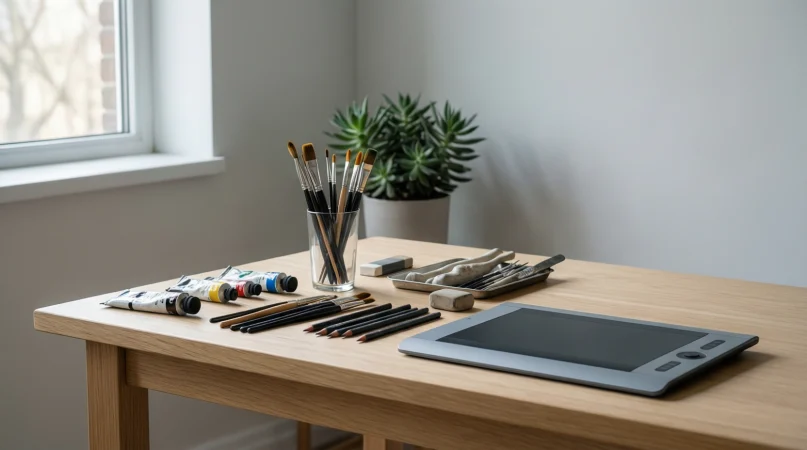
Imagine walking through an art gallery. You see a watercolor landscape, a bronze sculpture, a charcoal sketch, and a digital illustration on a screen. They all look different not just in subject, but in how they’re made.
That how is the medium.
Understanding what medium means in art helps you:
- Talk about artwork confidently
- Appreciate the artist’s technical choices
- Choose the right materials for your own creative projects
- Read museum labels, critiques, and art descriptions without confusion
Whether you’re a student, hobbyist, collector, or just art-curious, this guide will give you a complete, clear, and practical understanding of what medium means in art with examples, comparisons, tables, and FAQs.
What Does Medium Mean in Art?
In simple terms, medium = material.
But in practice, it goes a bit deeper.
In art, a medium describes:
- The physical substance used to make the artwork
- The tool or process involved
- Sometimes both material and technique together
Basic Examples
- A pencil drawing → graphite is the medium
- An oil painting → oil paint is the medium
- A marble statue → marble is the medium
- A digital illustration → digital software is the medium
Singular vs. Plural
- Medium → one material (oil paint)
- Media → multiple materials (oil paint + collage + ink)
The Origin of the Term “Medium” in Art
The word medium comes from Latin medius, meaning middle or means.
How It Entered Art Language
- Historically, the term described the means by which something was achieved
- Artists and scholars adopted it to describe the means of artistic expression
- Over time, it became standard terminology in:
- Art education
- Museum catalogs
- Academic writing
- Professional critiques
- Art education
Today, “medium” is a foundational concept taught in every art classroom worldwide.
Why Medium Is So Important in Art
An artwork’s medium affects almost everything about it.
Medium Influences:
- Texture – smooth oil paint vs. rough charcoal
- Color depth – watercolor transparency vs. acrylic opacity
- Durability – bronze lasts centuries, chalk does not
- Cost – digital art vs. marble sculpture
- Emotional tone – soft pastels vs. harsh ink lines
Artists don’t choose a medium randomly it’s a deliberate creative decision.
Common Types of Art Mediums (With Examples)
Here’s a clear breakdown of the most common art media.
1. Drawing Media
Used primarily for line, shading, and sketching.
- Graphite pencils
- Charcoal
- Ink
- Pastels
- Chalk
🖍️ Example: A charcoal portrait uses charcoal as its medium.
2. Painting Media
These involve pigments mixed with binders.
- Oil paint
- Acrylic paint
- Watercolor
- Gouache
- Encaustic (wax-based paint)
🎨 Example: A watercolor landscape uses watercolor as the medium.
3. Sculpture Media
Three-dimensional materials.
- Clay
- Marble
- Bronze
- Wood
- Stone
- Plaster
🗿 Example: Michelangelo’s David is marble as the medium.
4. Printmaking Media
Used for reproducing images.
- Woodcut
- Etching
- Lithography
- Screen printing
🖨️ Example: A screen print poster uses ink and mesh as the medium.
5. Textile & Fiber Media
Fabric-based materials.
- Yarn
- Fabric
- Thread
- Felt
- Weaving materials
🧵 Example: A tapestry uses textile fibers as the medium.
6. Digital Media
Technology-based art forms.
- Digital painting software
- 3D modeling tools
- Animation programs
- AI-assisted tools
💻 Example: A Procreate illustration uses digital media.
7. Mixed Media
More than one medium used together.
- Paint + collage
- Ink + watercolor
- Fabric + found objects
🧩 Example: A canvas combining paint, newspaper, and fabric is mixed media.
Labeled Example Table: Medium in Art Explained
| Artwork Type | Medium Used | Why It Matters |
| Pencil Sketch | Graphite | Allows precise lines and shading |
| Oil Painting | Oil Paint | Rich colors and slow drying |
| Sculpture | Bronze | Durable and detailed |
| Digital Art | Software | Easily editable and shareable |
| Collage | Mixed Media | Adds texture and layers |
Medium vs. Style vs. Technique (Common Confusion)
These terms are often mixed up but they mean very different things.
Medium
- What the art is made of
- Example: Oil paint
Style
- How the art looks
- Example: Impressionism, realism, abstract
Technique
- How the medium is used
- Example: Dry brushing, glazing, stippling
Quick Comparison Table
| Term | Meaning | Example |
| Medium | Material | Acrylic paint |
| Style | Visual approach | Cubism |
| Technique | Method | Layering |
Real-World Usage of “Medium” in Art
You’ll see the word medium used in many everyday art-related situations.
In Museums
- Medium: Oil on canvas
- Medium: Bronze sculpture
In Art Classes
- “Choose a medium for your final project.”
- “Experiment with different media this semester.”
In Online Art Listings
- Medium: Digital illustration
- Medium: Mixed media on wood
In Art Critiques
- “The artist’s use of this medium enhances emotional depth.”
Tone Examples: How “Medium” Is Used in Context
Neutral / Informative Tone
- “The medium of this artwork is watercolor on paper.”
Friendly / Casual Tone
- “I love working in this medium it’s super forgiving 😄”
Professional / Academic Tone
- “The chosen medium reinforces the conceptual framework of the piece.”
Slightly Dismissive (Rare but Possible)
- “The medium feels underdeveloped for the scale of the idea.”
Alternate Meanings of “Medium”
Outside of art, medium has other meanings:
- Size – medium shirt
- Spiritual – a person claiming to communicate with spirits
- Communication – television as a medium
- Cooking – medium-rare steak
⚠️ Context matters. In art, medium always refers to material.
Polite & Professional Alternatives to “Medium”
Depending on context, you might see or use:
- Material – simpler, beginner-friendly
- Art materials – casual explanation
- Artistic medium – formal writing
- Media – plural form
✔️ In academic or museum writing, medium/media is preferred.
Choosing the Right Medium as an Artist
If you’re creating art, medium choice matters more than you think.
Consider:
- Skill level (watercolor can be tricky for beginners)
- Budget (oil painting can be expensive)
- Time (acrylic dries fast, oil dries slow)
- Final look (texture, color depth, realism)
🎯 Tip: Experiment with multiple media before committing to one.
Frequently Asked Questions
1. What does medium mean in art class?
It means the material you use to make your artwork, like pencil, paint, or clay.
2. What is an example of a medium in art?
Oil paint, watercolor, charcoal, marble, and digital software are all examples.
3. Is medium the same as style?
No. Medium is what it’s made of. Style is how it looks.
4. What does mixed media mean in art?
It means more than one medium is used in the same artwork.
5. Can digital art be considered a medium?
Yes. Digital tools are a recognized modern art medium.
6. Why do artists choose certain media?
Each medium offers different textures, effects, durability, and emotional impact.
7. What is the plural of medium in art?
The plural is media.
8. How do museums list mediums?
Usually in labels like: “Oil on canvas” or “Bronze sculpture.”
Conclusion: Understanding Medium in Art Made Simple
At its core, medium in art means the material an artist uses to create an artwork whether that’s oil paint, watercolor, charcoal, clay, fabric, or digital tools. It’s not about the subject or the style, but the substance and method that bring the idea to life.
Knowing the medium helps you:
- Better understand how an artwork was made
- Appreciate the skills and choices behind it
- Talk about art more confidently in classes, galleries, or online
- Choose the right materials for your own creative projects
From traditional painting and sculpture to modern digital and mixed media art, the medium plays a powerful role in shaping texture, mood, durability, and overall impact. Once you start noticing the medium, you’ll see art with sharper eyes and a deeper appreciation for the creative process behind every piece.
Justin Young is a passionate Digital Creator and Content Writer who specializes in crafting engaging, informative, and results-driven content. He focuses on creating high-quality, blog posts, and digital content that capture attention and deliver real value to readers. With a strong interest in storytelling, trends, and online growth, Justin helps brands and individuals connect with their audiences through clear, impactful, and creative writing.