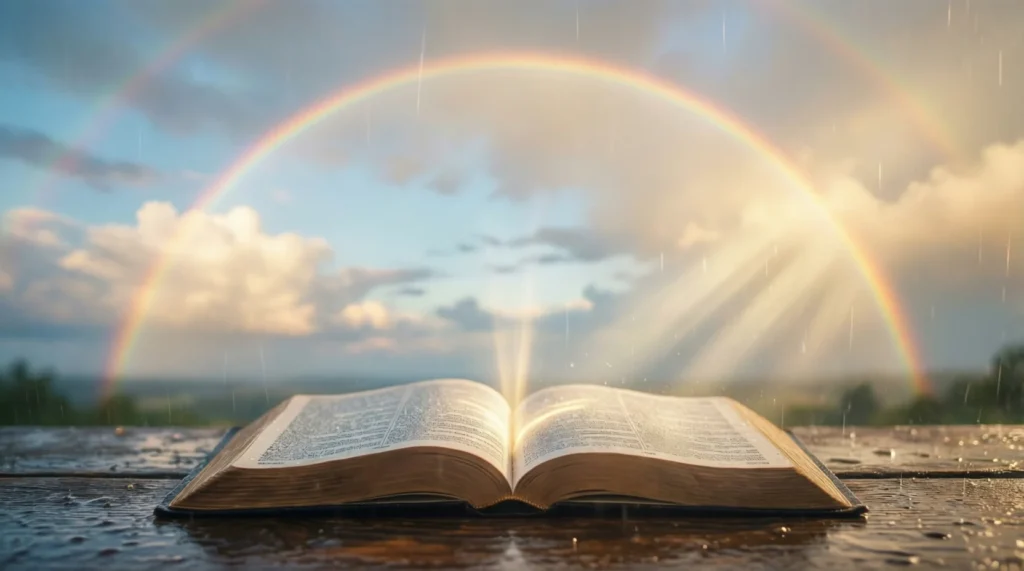
In the Bible, the rainbow is a sacred symbol of God’s covenant with humanity, representing His promise, mercy, faithfulness, and peace after the Great Flood. It serves as a visible reminder that God would never again destroy the earth with a flood.
Almost everyone has paused to admire a rainbow stretching across the sky after a storm. It feels peaceful, hopeful, and full of wonder. But in the Bible, the rainbow is far more than a beautiful natural event; it carries deep spiritual meaning.
If you’ve ever asked, what does the rainbow mean in the Bibley, you’re not alone. This question is searched by people curious about biblical symbolism, God’s promises, and how ancient scripture connects to everyday life.
In this indepth guide, we’ll explore:
- The biblical meaning of the rainbow
- Its origin in Scripture
- Why it still matters today
- How it compares with modern interpretations
- Common questions people ask about it
Everything is explained in a clear, friendly, and respectful way, whether you’re a believer, a student, or simply curious.
🌈 The Biblical Meaning of the Rainbow
In the Bible, the rainbow represents:
- God’s promise (covenant) with humanity
- Mercy after judgment
- Hope after hardship
- Faithfulness and peace
- A reminder of God’s grace
The rainbow first appears in the Book of Genesis after one of the most dramatic events in biblical history, the Great Flood.
📖 Origin of the Rainbow in the Bible
The Rainbow Appears After the Flood
The rainbow is introduced in:
Genesis 9:12–17
After Noah, his family, and the animals survive the flood, God places a rainbow in the sky as a sign of His covenant.
Key Biblical Context
- Humanity had fallen into deep corruption
- God sent a flood as judgment
- Noah obeyed God and built the ark
- After the flood, God promised never to destroy the earth by water again
The rainbow became the visible sign of that promise.
🤝 God’s Covenant: What the Rainbow Stands For
In biblical language, a covenant is a sacred agreement. The rainbow represents a unilateral covenant, meaning:
- God made the promise
- Humanity did not have to earn it
- God bound Himself to keep it
What God Promised Through the Rainbow
- 🌍 Never again flood the entire earth
- 💧 Judgment would not come through water
- 🕊️ Peace between heaven and earth
- 💖 Mercy would outweigh destruction
This makes the rainbow a symbol of divine restraint and compassion.
🌧️ Why a Rainbow After a Storm Matters
Rainbows appear after rain and that’s no accident in biblical symbolism.
Symbolic Meaning
- Storm = Judgment or hardship
- Rain = Cleansing or consequence
- Rainbow = Hope and restoration
The message is powerful: even after discipline or suffering, God offers hope.
🕊️ Spiritual Themes Associated with the Rainbow
The rainbow in the Bible is linked to several spiritual ideas:
- Grace – God’s kindness despite human failure
- Faithfulness – God keeps His word
- Peace – Hostility replaced with harmony
- Hope – A future not defined by destruction
These themes appear throughout Scripture, making the rainbow one of the most comforting biblical symbols.
📜 Other Biblical Mentions of the Rainbow
Although Genesis is the most famous reference, rainbows appear elsewhere in the Bible.
Ezekiel’s Vision
Ezekiel 1:28 describes a rainbow surrounding God’s glory, symbolizing:
- Divine majesty
- Holiness
- God’s radiant presence
Revelation’s Imagery
Revelation 4:3 describes a rainbow around God’s throne, representing:
- Eternal covenant
- God’s unchanging nature
- Hope even in end-times prophecy
📊 Example Table: Rainbow Meaning in Biblical Context
| Context | Meaning |
| After the Flood (Genesis) | God’s promise and mercy |
| God’s Covenant | Faithfulness and restraint |
| Ezekiel’s Vision | Divine glory |
| Revelation | Eternal hope |
| After Rain | Peace after hardship |
🌍 Popularity and Real-World Usage of the Biblical Rainbow
Why the Rainbow Is Still Important Today
The rainbow remains popular in:
- Christian teachings
- Sermons and devotionals
- Children’s Bible stories
- Religious art and symbolism
It’s often used to teach:
- God keeps His promises
- Hope follows hardship
- Faith can be trusted
🗣️ Examples of How the Rainbow Meaning Is Used
Friendly Tone Example 😊
After a tough season, seeing a rainbow reminds me that God always keeps His promises.
Neutral / Educational Tone 📘
In the Bible, the rainbow symbolizes God’s covenant with humanity after the flood.
Reflective / Spiritual Tone 🙏
The rainbow serves as a quiet reminder of divine mercy and grace after judgment.
There is no negative or dismissive tone in biblical usage; the symbol is entirely positive and hopeful.
🔍 Comparison: Biblical Rainbow vs Modern Meanings
Today, the rainbow can carry multiple meanings depending on context. Let’s compare them clearly.
Rainbow Meaning Comparison Table
| Aspect | Biblical Meaning | Modern Cultural Meaning |
| Origin | Genesis (God’s covenant) | Social and cultural symbolism |
| Core Message | Promise and mercy | Diversity, identity, hope |
| Spiritual Focus | God’s faithfulness | Human expression |
| Usage | Scripture, faith teaching | Flags, art, activism |
Important note:
The Bible’s rainbow meaning is historical and theological, separate from modern symbolic uses.
🔁 Alternate Meanings of the Rainbow
Outside the Bible, the rainbow may represent:
- Diversity and inclusion
- Unity in differences
- Nature’s beauty
- New beginnings
- Hope after storms
While these meanings can coexist culturally, the biblical meaning remains rooted in God’s covenant.
🧠 How to Respectfully Discuss the Biblical Rainbow Today
When discussing the rainbow in religious or professional settings:
Polite and Professional Approaches
- Refer to it as a biblical covenant symbol
- Use scriptural references when appropriate
- Avoid dismissing other interpretations
- Keep the conversation respectful and contextual
Professional Alternatives in Writing or Teaching
- God’s covenant sign
- Symbol of divine promise
- Biblical sign of mercy
These phrases maintain clarity without confusion.
FAQs
1. What does the rainbow mean in the Bible?
The rainbow symbolizes God’s promise never to destroy the earth again by flood and represents mercy, peace, and faithfulness.
2. Where is the rainbow mentioned in the Bible?
It appears mainly in Genesis 9, and also in Ezekiel 1:28 and Revelation 4:3.
3. Is the rainbow a sign from God?
In the Bible, yes it is described as a sign of God’s covenant with humanity.
4. Does the rainbow represent forgiveness?
Yes. It reflects God’s mercy and restraint after judgment.
5. Why did God choose a rainbow?
Because it appears after rain, symbolizing hope after hardship and peace after judgment.
6. Is the biblical rainbow different from modern meanings?
Yes. The biblical meaning focuses on God’s promise, while modern meanings vary by culture.
7. Does the rainbow have end-times significance?
In Revelation, it represents God’s eternal nature and covenant, even in prophetic visions.
8. Can Christians still see the rainbow as God’s promise today?
Many believers do, viewing it as a reminder of God’s unchanging faithfulness.
🌈 Conclusion:
In the Bible, the rainbow is far more than a beautiful sight in the sky. It is a powerful symbol of God’s promise, mercy, and faithfulness. First introduced after the Great Flood in the story of Noah, the rainbow serves as a lasting reminder that God chose compassion over destruction and peace over judgment.
Biblically, the rainbow represents a covenant made by God Himself, one that does not depend on human actions but on His unchanging word. Every time a rainbow appears after a storm, it echoes the same message found in Scripture: hope follows hardship, and God keeps His promises.

Megan Lewis is a passionate and experienced content writer specializing in creating engaging and well-researched content. She excels at producing clear, informative, and reader-focused content that not only ranks well on search engines but also delivers real value to audiences.