
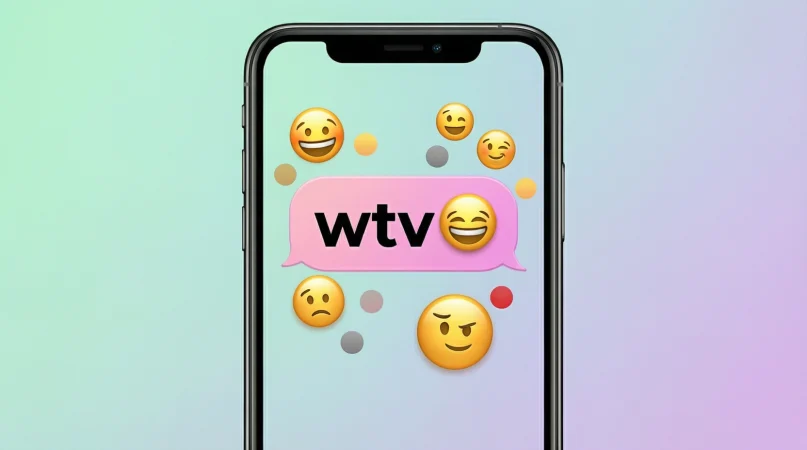
Quick Ans: WTV means “whatever.”
In text messages and online chats, it’s commonly used to express indifference, agreement, dismissal, or emotional distance, depending on context and tone.
WTV is one of those tiny internet abbreviations that can carry big emotional weight. Sometimes it’s chill. Sometimes it’s dismissive. And sometimes it’s straight up passive aggressive. 😅
If you’ve ever received a text that just said “wtv” and wondered What did they really mean by that?, you’re in the right place.
This in-depth guide explains what WTV means in text, where it came from, how people use it today, and most importantly how tone and context completely change its meaning.
What Does WTV Mean in Text Messages?
At its core, WTV = whatever. But in real conversations, it can mean very different things:
- Casual agreement
- Indifference or lack of preference
- Emotional shutdown
- Mild annoyance
- Strong dismissal
The meaning depends on:
- Who’s sending it
- What was said before
- Punctuation, emojis, or lack of response
- The relationship between the people texting
That’s why “wtv” can feel harmless in one conversation and cold in another.
Origin of WTV: Where Did It Come From?
WTV is a modern shorthand that grew out of:
- Early SMS texting (character limits mattered)
- Instant messaging platforms (AIM, MSN)
- Online gaming and chat culture
- Later adoption on Twitter, Snapchat, TikTok, and Instagram DMs
Unlike older abbreviations like LOL or BRB, WTV didn’t become mainstream until casual texting norms evolved. It’s more conversational and emotional than technical.
Timeline Snapshot
| Era | Usage |
| Early 2000s | Rare, informal chats |
| 2010–2015 | Growing use in texting |
| 2016–Present | Common in Gen Z & casual online talk |
How WTV Is Used in Real Life
People use wtv in texts for different reasons. Let’s break down the main usage categories.
1. Casual or Friendly Indifference
Here, wtv means I’m flexible or I don’t mind.
Example:
- Friend: Want pizza or burgers?
- You: wtv, I’m good with anything 😊
Tone: Relaxed, easygoing
Emotion: Neutral to positive
2. Neutral Agreement (Low-Energy Yes)
Sometimes wtv is basically a tired or low-effort “okay.”
Example:
- Partner: Let’s watch that movie.
- You: wtv
Tone: Flat, neutral
Emotion: Unenthusiastic agreement
3. Dismissive or Annoyed Response
This is where wtv gets its reputation.
Example:
- Them: You always do this.
- You: wtv.
Tone: Cold, dismissive
Emotion: Annoyance, emotional distance
Punctuation (especially a period) makes it feel harsher.
4. Emotional Shutdown or Conflict Avoidance
Sometimes wtv means I’m done talking about this.
Example:
- Them: Can we talk about what happened?
- You: wtv
Tone: Closed off
Emotion: Hurt, frustration, avoidance
WTV Tone Explained (Why It Feels So Powerful)
The same three letters can feel wildly different depending on how they’re written.
Tone Variations
| Version | Implied Tone |
| wtv | Neutral / casual |
| WTV | Strong dismissal |
| wtv… | Passive-aggressive |
| wtv lol | Playful, softens tone |
| wtv 😅 | Friendly, awkward |
| wtv. | Cold, final |
Rule of thumb:
The shorter and colder the message, the more dismissive it feels.
Examples of WTV in Context
Friendly / Chill
- wtv works for me 😄
Meaning: I’m flexible
Neutral
- yeah wtv
Meaning: Low-energy agreement
Mildly Annoyed
- wtv, do what you want
Meaning: I’m irritated but disengaging
Strongly Dismissive
- wtv.
Meaning: I don’t care anymore
Labeled Example Table: WTV Meaning by Context
| Situation | Message | Meaning |
| Planning with friends | wtv is fine | Easygoing |
| Casual chat | wtv lol | Playful |
| Argument | wtv. | Dismissive |
| Emotional discussion | wtv | Shutdown |
| Group chat | wtv 😅 | Awkward but friendly |
Is WTV Rude?
Not always but it can be.
WTV becomes rude when:
- Used during an argument
- Sent alone with no explanation
- Paired with silence afterward
- Used with punctuation like a period or ellipses
It’s less rude when:
- Used with emojis
- Part of a longer sentence
- Clearly casual or joking
Who Uses WTV the Most?
- Gen Z – Very common
- Millennials – Moderate use
- Professional settings – Rare (and not recommended)
It’s mostly seen in:
- Text messages
- Snapchat chats
- Instagram DMs
- Gaming chats
- Casual online conversations
Comparison: WTV vs Similar Text Abbreviations
| Term | Meaning | Tone |
| WTV | Whatever | Neutral to dismissive |
| IDC | I don’t care | More blunt |
| IDK | I don’t know | Neutral |
| K | Okay | Can feel cold |
| NM | Never mind | Withdrawn |
| Fine | Agreement | Often passive-aggressive |
WTV is softer than IDC, but colder than IDK.
Alternate Meanings of WTV
While whatever is by far the most common meaning, WTV can occasionally stand for:
- World Television (media contexts)
- Whatever TV (slang branding)
- With the View (very rare)
⚠️ In texting and social media, 99% of the time it means “whatever.”
Polite or Professional Alternatives to WTV
If you’re texting someone professionally or want to avoid sounding rude use these instead:
Casual but Polite
- I’m flexible
- Either works for me
- I don’t have a strong preference
Professional
- I’m open to your suggestion
- That works on my end
- I’m fine with either option
Softer Personal Options
- Up to you 🙂
- I’m okay either way
- Whatever you prefer (written fully)
When You Should Avoid Using WTV
Avoid wtv when:
- Talking to a boss or client
- Having a serious emotional conversation
- Trying to resolve conflict
- You don’t want to sound dismissive
In those cases, clarity beats brevity.
How to Respond If Someone Texts You “WTV”
Your response depends on their tone.
If It Sounds Casual
- Cool, let’s do that
- Got it 👍
If It Sounds Annoyed
- Are you okay?
- Do you want to talk about it?
If It Feels Dismissive
- Let me know if you want to discuss this later
- I’m here if you want to explain
WTV in Social Media & Online Culture
On platforms like TikTok or Twitter/X:
- wtv is often ironic
- Used in captions to show nonchalance
- Sometimes paired with humor or sarcasm
Example caption:
- late again wtv 😌
Meaning: I know, I don’t care (playfully)
FAQs
1. What does WTV stand for in texting?
WTV stands for whatever and is used to show indifference, agreement, or dismissal.
2. Is WTV rude?
It can be rude depending on context, punctuation, and tone especially in arguments.
3. What does “wtv.” with a period mean?
It usually sounds cold or final, often implying dismissal or emotional shutdown.
4. Is WTV the same as IDC?
No. IDC (I don’t care) is more blunt and harsher than wtv.
5. Can WTV be friendly?
Yes, especially when paired with emojis or used casually among friends.
6. Should I use WTV at work?
No. It’s too informal and can be misinterpreted as disrespectful.
7. How do I soften WTV in a text?
Add context, emojis, or write out “whatever works for you.”
8. Why does WTV feel passive-aggressive?
Because it often signals disengagement instead of open communication.
Conclusion:
In texting and online chats, WTV is a short and casual way to say whatever. People use it when they don’t mind what happens, want to end a discussion quickly, or feel a bit indifferent about a topic.
The meaning often depends on tone sometimes it’s relaxed and easygoing, and other times it can sound dismissive or annoyed. Understanding the context helps you decide how it’s meant, so you can respond appropriately in conversations.

Justin Young is a passionate Digital Creator and Content Writer who specializes in crafting engaging, informative, and results-driven content. He focuses on creating high-quality, blog posts, and digital content that capture attention and deliver real value to readers. With a strong interest in storytelling, trends, and online growth, Justin helps brands and individuals connect with their audiences through clear, impactful, and creative writing.