Definition:
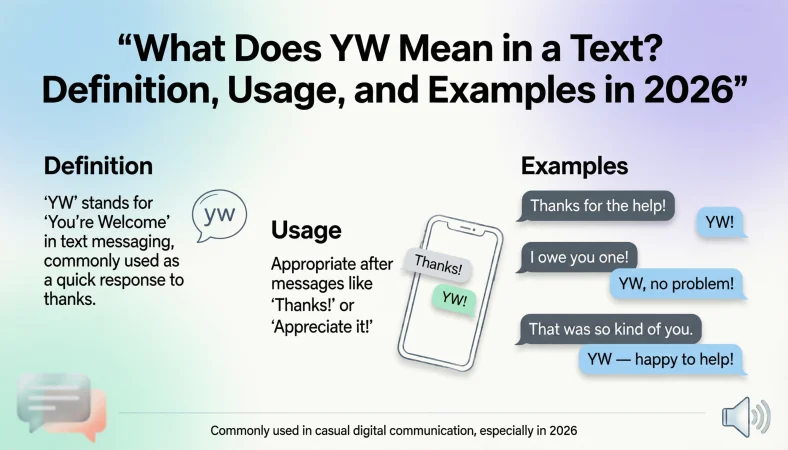
YW in text messaging means “You’re Welcome.” It’s a short and casual way to respond after someone says “thank you.”
Have you ever received a quick “yw” after saying thanks and wondered what it meant?
In today’s fast-paced texting culture, abbreviations are everywhere. From LOL to BRB, short forms save time and keep conversations flowing. One of the most common and polite ones is YW.
Let’s break down exactly what YW means in a text, how it’s used, when to use it, and whether it’s appropriate in different situations.
What Does YW Stand For?
YW = You’re Welcome
It’s simply a shortened version of the polite response people give after being thanked.
Example:
- Person A: Thanks for helping me!
- Person B: YW 😊
That’s it short, friendly, and polite.
Tone and Meaning of YW in Texting
The tone of YW depends on context, but it’s usually:
- ✅ Friendly
- ✅ Casual
- ✅ Polite
- ⚠️ Informal
It is rarely negative unless paired with sarcasm.
Examples of YW in Different Contexts
1️⃣ Friendly Conversation
- Thanks for the ride!
- YW! Anytime 🚗
Tone: Warm and helpful.
2️⃣ Quick Reply
- Thanks for the file.
- Yw
Tone: Short but still polite.
3️⃣ Slightly Sarcastic (Depends on Tone)
- Fine, I fixed it.
- Thanks…
- Yw.
Tone: Could feel a little dry depending on punctuation.
Context and emojis can change the meaning!
When Should You Use YW?
Use YW When:
- Texting friends
- Chatting casually
- Responding quickly
- In group chats
Avoid YW When:
- Writing formal emails
- Speaking to your boss
- Professional business communication
- Academic writing
Instead of YW in formal settings, say:
- You’re welcome
- My pleasure
- Happy to help
- No problem
Comparison: YW vs Similar Text Abbreviations
| Abbreviation | Meaning | Tone | Formal? |
| YW | You’re welcome | Casual | ❌ |
| NP | No problem | Friendly | ⚠️ Semi-casual |
| TY | Thank you | Casual | ❌ |
| THX | Thanks | Informal | ❌ |
| Ofc | Of course | Friendly | ⚠️ |
YW is one of the simplest and most common polite replies in texting culture.
Is YW Popular?
Yes! YW became popular with:
- SMS texting in the early 2000s
- Online chats
- Social media platforms
- Messaging apps like WhatsApp and Messenger
As texting evolved, people began shortening common phrases and “You’re welcome” became YW.
Can YW Have Other Meanings?
In most texting situations, YW means You’re Welcome.
However, in very rare cases, it could mean:
- Yeah, whatever (very uncommon and context-based)
But in 99% of conversations, it simply means You’re Welcome.
Professional Alternatives to YW
If you want to sound more polished, try:
- You’re very welcome
- Glad I could help
- Anytime
- My pleasure
- Happy to assist
These sound warmer and more professional than a quick “yw.”
FAQs
1. What does YW mean in texting?
It means You’re Welcome.
2. Is YW rude?
No, it’s not rude. It’s just informal.
3. Can I use YW in professional emails?
It’s better to write You’re welcome instead of using YW.
4. Is YW used on social media?
Yes, very commonly in comments and replies.
5. Does YW always mean You’re Welcome?
Almost always, yes.
6. Is YW outdated?
No, it’s still widely used in casual texting.
7. Should I add emojis after YW?
You can! 😊 makes it feel friendlier.
8. What’s the difference between YW and NP?
YW means You’re Welcome. NP means No Problem. Both respond to thanks, but NP sounds more casual.
Conclusion
So, what does YW mean in a text?
It simply means You’re Welcome a short, polite, and casual way to reply when someone thanks you.
While it’s perfect for texting friends or chatting online, it’s best to use the full phrase in formal situations. As with most abbreviations, context matters.
Now next time you see “yw,” you’ll know exactly what it means and when to use it 😊

Justin Young is a passionate Digital Creator and Content Writer who specializes in crafting engaging, informative, and results-driven content. He focuses on creating high-quality, blog posts, and digital content that capture attention and deliver real value to readers. With a strong interest in storytelling, trends, and online growth, Justin helps brands and individuals connect with their audiences through clear, impactful, and creative writing.